

Communications in planning
How better engagement can build trust with communities.
You can read our paper in full below or download the pdf.
Contents
Simon Creer: Foreword – A new approach to communication
Simon Wicks: Introduction – Are you sitting comfortably?
Nikki Davies: On fair foundations
Irene Beautyman: Speak to the purpose, not the policy
Rachel Edwards: The power of social licence in planning
Rachel Brisley: A deliberate path to understanding
Dr Bonnie Kwok: Planning with youth means planning for all
Jennie Savage: Notes from the edges of practice
Robin Hutchinson: Permission to play
Foreword: A new approach to communication
 Planning, no matter where it is done, relies on proper communications and consultation. Communities need to be properly informed and consulted on the plan making process. That is the root of the discretionary system we have in the UK and represents best practice across the world.
The decision-making powers of locally elected officials lies in the nature of our representative democracy. Therefore, the discretion in the system resides with them as representatives of their constituents. That means planning depends fundamentally on consultation with local communities and in their ability to express what they do and do not want to see in their area.
The public expect their voices to be heard. Furthermore, outcomes better meet their needs if they have the opportunity to be involved in the planning process.
Over recent decades we have seen the impact of massive changes in the communications landscape which have made it easier than ever to reach larger numbers of people. However, we have also seen the dangers at play in the growth of social media and the spread of misinformation. It doesn’t feel as if the planning system has kept pace with those changes.
The time to embrace new approaches, which clearly illustrate what is and isn’t possible through the system, is now. It will provide us with the opportunity to work with communities in the development of their local areas and hopefully dispel misinformation.
In England, the new National Planning Policy Framework and the new layers of regional planning by way of spatial development strategies could well be an opportunity for planners to make use of the new tools available to them and in so doing not only collaborate with communities but also shed light on the system as a whole. However, any system that relies on public engagement should be looking to adapt to this new world.
The discretionary nature of planning in the UK means it is incumbent on planners to try and reach these wider audiences.
Planning is done in collaboration with communities throughout the UK. Their discretion is the lodestone of that system and mediated in planning committees through local politicians. Over the past year it has become clear that the majority opinion has shifted in favour of housing delivery and development. It has not become an overwhelming majority, but recent reports do suggest that people are more favourable.
We just need to speak with them and listen properly to their views.
The MIMBY Majority report sponsored by us and delivered by Demos showed that 67 per cent of the UK population would accept development given certain caveats. Those caveats, I would imagine, are locally specific and gathered through structured communications and engagement.
However, the flip side of that particular coin is that according to YouGov polling we gathered for the It Takes Planners & You campaign only 7 per cent of the population has engaged with the planning system.
If the majority of the country would be willing to at least consider development but only a tiny minority have actually engaged with the system, can it truly be said to be discretionary?
The numbers actually get more disappointing.
The RTPI has run the numbers on local plans. And what we found was troubling.
Our analysis found that the average response rate to local plan consultations across the UK was 0.56 per cent. But engagement rates can be lower still: the average response rate for London authorities was less than half that, at 0.22 per cent. The authority with the lowest response rate in England (and the UK) saw just 0.01 per cent of its population engage in its local plan consultation process. These are tiny numbers for a system founded on collaboration. This paucity of response also means that by the time developments make it to planning committees there is an available argument that not enough people knew what was being proposed.
This is a recipe for discontent and a feeling that planning is something that is done to people, not with them.
The additional layer of spatial development strategies will add to this. The communities being consulted will be larger, the decisions more opaque and further away. Many people may not even be aware of which combined authority they are in, let alone be motivated enough to engage with planning at that level.
This is in addition to the fact that the new NPPF sets out the expectation that all local authorities in England will have a local plan in place in 30 months. That is quicker than previous delivery and will now include three periods of consultation in its process.
Taken all together, we can see a system that will require more engagement, more communication and more clear explanation of what the system does and does not do. If we are to bring the more positively inclined communities along with us and make this system work, then there is a large job of work to be done.
Asking trained planners to become communications and engagement specialists in short order is difficult. So, we at the RTPI and The Planner decided to seek out expert advice and guidance from practitioners who know how this is done.
Unusually for the RTPI, this report is not a detailed dive into a specific research topic or a well-considered review of the policy landscape. Think of this more as a how-to guide or a series of best practice examples.
With the help of the editorial team at The Planner, who have been doing excellent work with their story-telling strand we have collated eight essays and interviews on communications and engagement. Each article illustrates a method of communications and engagement that planners around the country can adopt for their own purposes.
This is not an England only report either. All of the UK’s planning systems require engaging with the public and these methods do not end at Hadrian’s Wall, the Irish Sea or Offa’s Dyke. The major policy changes may be England focused, but we genuinely hope that these tools will be of use to planning professionals from Lisburn to Lewis to Llandudno.
We make no claims that these approaches to communications and consultation will reduce objections to zero, but we hope they will help planners to mobilise more people and increase levels of engagement. It is often said that planning is not a referendum, which I agree with. But carefully crafted and collaborative communications, storytelling and engagement could well make it much more of a team game.
Furthermore, there is a hope that by making the process of planning more visible and better understood the public will begin to understand that planners do in fact work with communities’ best interests at heart and shape the world around them for the better. There is a very real opportunity presented to us all. The combination of the new policy landscapes and new regional planning provide the chance to clearly explain what the system does and does not do. They provide an opportunity to inform the public widely on how the system now works and where they can help to inform it.
We all know the positive outcomes possible from a plan-led system. One of the reasons for this is because, at its very core, the system is centred on taking into account the views of the public. We appear to have lost that connection to those opinions somewhere along the way, but hopefully the thoughts and guidance shared on the pages that follow will be the start of a process of getting that back.
Simon Creer is Director of Communications for the Royal Town Planning Institute
Introduction: Are you sitting comfortably?
 Stories. That’s our stock in trade at The Planner. It’s also what I understand planning to be about. Yes, it’s a regulatory system. Yes, it’s a set of rules for how we arrange the built environment. Yes, it’s a series of plans for the future development of our living spaces. Yes, it is, let’s face it, technocracy manifest.
But planning is also an attempt to answer one of life’s most important questions: how do we want to live? And it’s the story that tells us one of the ways in which we’ve chosen to answer that question. It’s a story of us, and what matters in our lives as we journey through time and, of course, space.
In the construction of that story, planning weaves the stories of millions of people together within other, larger, narratives of place. These are stories worth telling, sharing and celebrating.
Why, then, is there such antagonism towards planning and its practitioners? Could it be that there’s some kind of comprehension gap, rooted perhaps in a failure to gather and tell these stories in a way that meaningfully connects the planning profession with the people it serves?
This bothers me. It bothers the RTPI, too. We know that planners have a passion for place and a desire to tell these stories. But perhaps planning professionals lack the knowledge of how, or the opportunity or the inspiration. We want to change this.
This paper aims to give you, planners and other ‘place’ practitioners, the how and the why. It’s a collection of essays, meditations, case studies, rallying calls, advice notes and interviews by and with people who have something to say about communication, consultation and engagement.
Our contributors come from within planning and without. Their pieces span from best practice for consultation through to discussion of deliberative engagement and how to use actual storytelling to connect people with place.
There are clear themes that emerge from the eight pieces on the following pages, that show us how take a journey from how best we can use the system as it is towards an idea of place as a narrative, authored with the communities that live within it.
It’s an idea of place and place-shaping that exists largely beyond the boundaries of planning as we now know it. To embrace it would, in my view, give planners a language with which they can connect with the communities they serve, and reconnect with the original passion that brought them into the planning profession in the first place.
Trust. There can be no meaningful communication without it. To begin, Nikki Davies explains how consistency, clarity and fairness can begin to restore the legitimacy of the planning system with the people that come into contact with it.
Outcome. Irene Beautyman argues that planners need to stop talking to communities affected by development about policy and the processes that lead up to that change, and instead focus on the change itself and its outcomes. Ultimately, people want to know: what are you trying to achieve, and why does it matter to me?
Permission. Without a discussion of outcomes, a project can have no real ‘social licence’, the permission required from a community to bring change. When this informed consent is missing, says Rachel Edwards, a project will rarely be well received and may well be dogged by resistance on the way to completion and beyond.
Deliberation. Dialogue is at the heart of building consent. As Rachel Brisley observes, structured dialogue in which planners and communities interrogate ideas together allows values and principles to emerge alongside preferences, opening the door to a better informed and more considered decision-making process.
Inclusion. The wider the range of people ivolved in decision-making the better. Dr Bonnie Kwok’s work to include young people within planning processes draws on all of the techniques described so far to bring marginalised voices into decision-making. But, she points out, this doesn’t have to be restricted to young people.
Feeling. Jennie Savage also works in marginal spaces, giving voice to the previously unheard through a variety of highly creative and unorthodox engagement techniques that foreground people’s feelings about place. Her 'Notes from the edges of practice’ provide a guide to integrating unconventional approaches into formal planning engagement processes. You don’t have to follow ‘the rules’.
Play. What if we began to think of the places we inhabit as playgrounds in which we can release our imaginations into creating new projects, new plans, new histories, new ways to experience the built environment around us? Robin Hutchinson teaches the value of giving people permission to play and opens the door to the narrative of place that Matthew Morgan writes about so eloquently in our final piece.
Storytelling. The end of this particular journey is also the beginning of a new journey articulated by Matthew Morgan as a renewed understanding of place as a locus for stories, both collective and personal, both familiar and yet to be written. Uncovering these narratives means dispensing with the language of planning and embracing a new way of speaking that delves more deeply into the connections between people, place and institutions.
Please, join us on this journey.
Simon Wicks is Editor of The Planner
The story so far…
Research and surveys conducted by the RTPI, The Planner and partners in recent years reveal a picture of disconnection from planning, dissatisfaction with planning decisions and discontent that may flare into accusations and abuse.
These figures give an indication of the context in which planning in the UK currently operates and which provides the backdrop for the pieces that follow.


On fair foundations
Would providing fairer and more consistent foundations for participation begin to provide a pathway to repairing the damaged trust between planning and the public? Nikki Davies offers a communications insider’s view
 For years, we‘ve tended to frame poor public engagement in planning as a communications problem, as though the issue could be resolved simply through better messaging, more polished consultation materials or another round of stakeholder workshops, when in reality the deeper issue is that people struggle to trust systems they do not properly understand, particularly when those systems feel inconsistent, opaque or difficult to navigate.
After 15 years of working within the UK planning system, I have become increasingly convinced that much of what is routinely described as consultation fatigue, hostility towards development or entrenched opposition is, in fact, rooted in something more structural: a widespread lack of confidence in the process itself and in whether ordinary people genuinely feel able to participate in it in a meaningful way.
Over that time, I have seen too many examples of planning done exceptionally well, where local authorities, developers and communities have collaborated openly and constructively to deliver places that people genuinely value and support. However, I have also seen the opposite: consultation exercises that met every statutory requirement while failing entirely to create meaningful dialogue, engagement processes that appeared designed more to defend decisions than to shape them and public conversations around development that became so dominated by misinformation and mistrust that productive discussion was almost impossible from the outset.
This matters because planning is ultimately a system that depends upon public legitimacy. Governments across the UK increasingly recognise the central role planning must play in delivering housing, infrastructure, economic growth and wider policy ambitions; yet those ambitions will remain difficult to achieve if large sections of the public continue to feel disconnected from, confused by or sceptical of the very process intended to shape change in their communities.
The industry has a trust problem, not simply a communications problem
The industry has spent years asking why engagement levels remain so low, but the answer is often remarkably straightforward. Participation in planning is still too inconsistent, too fragmented and, in some cases, unintentionally exclusionary.
As part of Meeting Place’s twentieth anniversary this year, we have been developing a campaign called ‘Building on fair foundations’, which examines some of the inconsistencies embedded within the planning system and the barriers these create for fair and balanced public participation.
What quickly became apparent through this work was that, depending on where somebody lives, they may encounter completely different expectations, standards and opportunities when attempting to engage with planning.
In some areas:
- residents can formally support an application • participation can easily happen online, by email, or by post
- committee speaking rights are relatively balanced.
In others:
- residents are only provided the opportunity to ‘object’ or ‘not object’
- digital systems are outdated, difficult to navigate and require registration
- participation requires personal information to be publicly displayed.
These may appear to be administrative details, but they are not inconsequential. The structure of a process inevitably shapes the behaviour within it. When systems make it easier to object than to support, objections become more visible. When participation platforms are confusing or outdated, only the most motivated voices persist long enough to engage. When people feel exposed, ignored or uncertain whether their contribution will matter, many simply disengage altogether.
Too often, the industry then mistakes that disengagement for apathy or assumes that the loudest voices represent the majority view, when in reality a great many people remain effectively absent from the process altogether.
As illustrated above, the RTPI’s own research illustrates the scale of this issue rather starkly:
- Only 7 per cent of the population report having been involved in the planning system
- 52 per cent believe it is difficult to engage with local planning decisions
- 39 per cent believe their involvement would make little or no difference anyway.
Those figures should concern everyone involved in planning because they point not simply to a communications challenge but to a broader crisis of confidence in public participation itself.
Most people are not anti-development
Despite the current tone of public debate, I think the industry often fundamentally misreads public attitudes towards development.
In my experience, most people are not instinctively opposed to change in the way that industry shorthand sometimes suggests. More often, they are frustrated by processes they perceive as inaccessible, confusing or predetermined. They are resistant to feeling ignored, rather than resistant to all development under any circumstances.
The MIMBY Majority research by Demos and the RTPI supports this point, finding that a majority of people would be open to new development under the right conditions, while many simultaneously remained unclear about how to engage with the planning process at all.
That distinction matters enormously because it changes the role of engagement entirely.
The job is not to ‘sell’ development, but rather the job is to:
- help people understand what is actually being proposed
- create space for informed discussion
- make participation feel worthwhile
- demonstrate clearly where feedback has influenced outcomes
- build confidence that the process itself is fair.
The moment consultation starts to feel performative, communities disengage. People can usually tell the difference between genuine engagement and a process that exists primarily to satisfy compliance requirements.
Planning communications are still too often written for planners
A persistent problem in planning engagement is that too much communication is still written for industry professionals rather than for the public. Communities are frequently presented with technical language, policy terminology and
procedural explanations that may be entirely accurate but are practically impenetrable to anybody without planning knowledge. Most residents do not care whether an application is outline or reserved matters consent. They don’t know the difference between a Section 106 or a Section 78. They care about whether traffic will worsen, whether schools and GP surgeries can cope and will get investment, whether homes will remain affordable for future generations and whether anybody genuinely intends to listen to what they have to say.
That is where engagement conversations need to begin.
Good engagement is not:
- a leaflet drop nobody reads
- a consultation website buried three clicks deep
- a room full of exhibition boards written in planning jargon
- a process that starts after the key decisions have already been made.
Meaningful engagement requires clarity, accessibility and honesty from the outset.
Communities are generally more capable of engaging with nuance than the industry sometimes assumes. People do actually understand that development involves trade offs. What damages trust is not complexity itself, but the perception that information is being softened, withheld or managed too carefully.
- If there are constraints, explain them plainly.
- If aspects of a proposal cannot change, explain why.
- If feedback genuinely shaped outcomes, demonstrate that visibly and specifically.
- If feedback couldn’t be taken on board, don’t be afraid to explain that, too.
People are far more likely to engage constructively when they feel they are being treated like adults rather than managed through a process.
Social media has changed planning engagement permanently
The planning sector also needs to be far more honest about the impact social media now has on local planning debates.
Misinformation spreads rapidly through local Facebook groups, WhatsApp networks and community forums, often long before factual information has properly reached residents. Simplified narratives, particularly negative ones, travel faster than detailed explanations almost every time.
The Planner’s research found that 60 per cent of planners believed social media regularly contributed to misinformation around planning locally. A further 36 per cent said they felt it contributed to misinformation occasionally. Many planners also reported negative impacts on wellbeing and personal targeting online.
Yet many engagement strategies still rely on static websites and lengthy PDF documents that simply do not reflect how people now consume information. And don’t get me started on the ‘virtual public exhibition’…
That does not mean consultation should become reactive or sensationalist, but it does mean the industry needs to adapt.
Effective engagement today requires:
- shorter and clearer messaging
- visible myth-busting
- proactive digital communication
- faster responses to misinformation
- trusted local voices and partnerships
- consistency across online and offline channels
- plain English rather than institutional language.
Most importantly, trust cannot suddenly be built during a two-week consultation window if communities have spent years feeling disconnected from local decision making processes more broadly.
AI is rapidly changing the landscape even further so we need to modernise our approach quickly or risk even further apathy or disengagement.
Building on fair foundations
The core argument behind Meeting Place’s ‘Building on fair foundations campaign’ is a simple one: if we want better planning outcomes, we need fairer and more consistent foundations for participation.
This is not a call for more bureaucracy or more complexity. If anything, it is the opposite.
There are several relatively straightforward reforms that could significantly improve confidence in the process:
- Provide a clear option to support, not just object
- Remove the requirement to publish your name and/or address
- Introduce minimum accessibility and mobile standards
- Make electronic submissions the default
- Ensure supporters have equal opportunity to speak at committee
- Allow committees to ask questions of speakers
- Standardised training for planning committee members.
None of these changes would remove local democracy. In many respects, they would strengthen it by making participation feel more understandable, equitable and trustworthy regardless of geography.
Ultimately, planning is about managing change and change will always provoke debate. Nor should it not. Healthy disagreement is an essential part of any democratic process.
However, there is a significant difference between healthy debate and dysfunctional participation and at present the planning system too often allows the latter to dominate while quieter, more constructive or potentially supportive voices remain absent from the conversation altogether.
That is the challenge the industry now faces.
If we genuinely want to build more homes, better infrastructure and stronger communities, then rebuilding public confidence in how people participate in planning is not peripheral to that ambition; it is central to it.
Building on fair foundations is not about manufacturing agreement or eliminating opposition. It is about creating a planning system that people trust enough to engage with honestly and constructively in the first place.
Nikki Davies is chief executive at Meeting Place
Speak to the purpose, not the policy
Good communication begins with an idea of an outcome, not an explanation of policy, says Irene Beautyman
 Too often, planning communication begins with legislation, policy documents and statutory requirements. The public rarely connects with these. What people want to know is in fact much simpler:
What are we trying to achieve, and why does it matter to me?
Planning exists to manage the use of land and buildings in the long-term public interest. That purpose is clear, relevant and meaningful. Yet we often bury it beneath references to Acts, policies and procedures.
If we want better engagement, we need to start with the outcome rather than the process.
The communication and consultation challenge
Many planning consultations focus on technical details before explaining the bigger picture. As a result, people can struggle to see why planning matters or how it affects their daily lives.
Good communication should answer three questions:
- What are we trying to achieve?
- Why does it matter?
- How can people influence it?
When we lead with these questions, planning becomes more accessible, relatable and relevant.
Just as importantly, we need to be clearer about what we mean by the public interest. If planning exists to serve the long-term public interest, then our communication should explain what that looks like in practice. People are far more likely to engage when they understand the outcomes we are seeking to achieve and how those outcomes connect to their lives, communities and futures.
A case in point: Lessons from shaping places for wellbeing
The Shaping Places for Wellbeing Programme set out to define what the long term public interest looks like in practice and bring this into all our thinking and decision making.
Delivered jointly by Scotland’s Improvement Service and Public Health Scotland, and funded by The Health Foundation and Scottish Government, the programme worked with seven Scottish towns to embed a preventative, place-based approach in local decision-making.
At its heart was a simple ambition: to create places that support the health and wellbeing of people and planet while reducing inequalities.
“Creating great places contributes to a triple win: better outcomes for people, a healthier planet and greater equity”
The programme developed practical tools and evidence-based resources that help planners, partners and communities focus on outcomes rather than processes. Central to this work are the Place and Wellbeing Outcomes, which provide a shared framework for understanding the characteristics of places that support healthier, fairer and more sustainable lives.
A key strength of the Place and Wellbeing Outcomes is that they are grounded in robust evidence. This matters for communication and engagement because it moves conversations away from opinion and towards shared understanding.
The evidence gives planners, partners, elected members and communities confidence that creating great places contributes to a triple win: better outcomes for people, a healthier planet and greater equity. Too often, discussions about place become trapped in competing views or assumptions about what might work. The Outcomes provide an evidence-based foundation that helps people focus on what is known to make a difference.
Perhaps most importantly, they provide a degree of certainty. We do not have to guess the likely impact of decisions or wait fifteen years to understand whether a place is supporting health, wellbeing and equity. The evidence already tells us which features of places contribute to these particular outcomes. This allows conversations to move beyond debate about whether place matters and focus instead on how best to deliver the outcomes communities want to see.
In this way, the Place and Wellbeing Outcomes are more than a decision-making framework. They provide a common language for communication, engagement and collaboration. They help planners explain why decisions matter, make engagement more meaningful and build confidence that planning can contribute to positive change.
Trust through partnership
One of the most important lessons from the Shaping Places for Wellbeing Programme was that planners cannot build trust with every community on their own.
Many third sector organisations have spent years, and sometimes decades, building relationships with people who are least likely to engage with public consultations. They understand the day to-day realities of the communities they support and often have deep insight into the preventative measures that would make the greatest difference to people’s lives.
If planning is serious about improving equity, we need to work much more closely with these organisations.
This is particularly important in Scotland, where prevention sits at the heart of the Scottish Government’s Public Service Reform agenda. National Planning Framework 4 places greater emphasis on tackling inequalities and improving outcomes, but there remains a gap between recognising equity as an objective and understanding how to deliver it in practice.
Traditional engagement approaches will continue to play an important role, but they are unlikely on their own to reach those who experience the greatest disadvantage or who have the least trust in public institutions. We need to build on and engage with existing relationships, knowledge and expertise rather than expecting communities to repeatedly engage through the system’s formal consultation processes.
As part of the Shaping Places for Wellbeing Programme, Community Insight Papers were developed for each of the seven towns. These drew together findings from previous engagement activities alongside evidence and intelligence from local third sector organisations and community groups. Rather than creating another consultation exercise, the aim was to capture and share existing knowledge about the barriers, challenges and opportunities experienced by the different communities involved.
The result was a resource that could be used across council departments and partner organisations to support collaboration around improving equity. It helped ensure that community knowledge informed decision-making, reduced duplication and provided a stronger foundation for preventative action.
This is a role that the planning profession is uniquely well placed to lead. We know that planning already brings together a wide range of interests, evidence and partners in shaping the future of places. By acting as a convenor and coordinator of community insight, planners can help ensure that decisions are informed not only by technical evidence, but by a richer understanding of the experiences of those most affected by inequality.
The most effective engagement does not start with a consultation document. It starts with a conversation about the future of a place and the outcomes people want to see.
The Shaping Places for Wellbeing Programme showed that when people have a shared understanding of what creates good places, engagement becomes easier, discussions become more productive and decisions become more transparent. Evidence helps create trust, trust encourages participation and participation strengthens decision-making.
It also demonstrated the value of drawing on the knowledge that already exists within communities. By working alongside trusted third sector partners and bringing together community insight in a way that can be shared across organisations, planners can help ensure that decisions are both evidence-informed and grounded in lived experience.
When planning communications focus on long-term public interest, health, wellbeing, sustainability and equity, they become easier to understand, more relevant to communities and more likely to inspire meaningful participation.
The challenge for planners is not simply to communicate more. It is to communicate differently.
Ten of the best: Lessons for better engagement
- Lead with purpose, not policy. Explain what planning is trying to achieve before discussing legislation.
- Drop the jargon. Avoid acronyms and technical language wherever possible.
- Show what’s in it for people. Make the benefits tangible and relevant to everyday life.
- Publish what you heard. Demonstrate and share how consultation feedback influenced decisions and create a resource that others can learn from.
- Focus on inequality. Understand who is least likely to be heard, identify existing sources of community insight and actively seek perspectives from organisations working with those experiencing disadvantage.
- Work with trusted partners. Third sector organisations often have stronger relationships with communities than public bodies. Their knowledge, experience and trust are essential to meaningful engagement and preventative action.
- Use evidence to build confidence. The Place and Wellbeing Outcomes provide a robust evidence base that helps people understand how planning decisions can improve health, wellbeing, sustainability and equity. 8. Tell a positive story. Frame planning as a tool for creating healthier, fairer and more sustainable places.
- Engage early and often. Conversations should begin before proposals are fixed for them to be part of the decision making process.
- Build trust through consistency. People engage when they believe their views matter and can see how their contributions have influenced decisions.
Irene Beautyman is Planning for Place Programme lead at the Improvement Service
Q&A: The power of permission: Why ‘social licence’ matters
Rachel Edwards is Director of Strategic Communications at Turley and formerly Communications and Marketing Manager for Northern Ireland’s Strategic Investment Board. She tells Simon Wicks how seeking ‘social licence’ builds a bridge of trust between planners and communities that makes better development possible
 Simon Wicks (SW): You worked in a commercial marketing role before moving into a position with more social impact at the Strategic Investment Board. How did that feed into what you do now, and why make the switch?
Rachel Edwards (RE): “I worked at Lunn’s Jewellers. which is the authorised retailer here for brands like Rolex and Patek Philippe. At the time they were also developing their own diamond brand (Portfolio of Fine Diamonds), so we built that brand out, and then we franchised it out across the UK and Ireland. What that taught me was the power of brand narrative and strategic storytelling. Anthony Tasgal talks about it in The Storytelling Book and as he puts it: ‘fact tells, story sells’. It sounds simple, but it’s true.
“One of the things that you learn very quickly in marketing, particularly when you’re looking at high-end products that people don’t need at a fundamental level is that what you’re pitching is identity, aspiration and ultimately self-actualisation. Patek Philippe’s tagline is ‘You never actually own a Patek Philippe, you merely look after it for the next generation’. They’re not selling you a watch. They’re selling you a legacy.
“That idea has stayed with me. Whether you’re talking about a luxury brand or a major infrastructure project, people don’t connect with technical detail first. They connect with what something means. That’s the thread I’ve carried through into the work I do today.”
SW: So you went from there to the Strategic Investment Board, where you worked on public communications for ‘strategically significant projects’, many of which generated community resistance. It was here you encountered this idea of ‘social licence’. What’s that all about?
RE: “We’re very planning led, and rightly so – we do need those processes and those protocols in place – but an awful lot of what I do gets framed as ‘You’re here to de-risk a planning process’. I challenge that. I’m like, ‘No, I’m here to make sure people get the best possible outcome’ and that’s from a community perspective, social perspective, environmental perspective.
“What gets me up out of bed in the morning is that all of this amazing investment is coming into this community or coming into this space. We’re going to create a new place, we’re going to create a new community, we’re going to do all of these amazing different things. But have you actually asked people? Do you have permission to do this in the first place, as in, is there a consensus or social licence around it? Do you have their consent on a social level, on an emotional level? And how are you going to build and sustain that as you go through?”
What is social licence?
In a presentation she delivers to other practitioners and organisations, Rachel cites the Institute of Public Administration of Canada’s definition of social licence: “Society’s moral and political approval, sufficiently widespread and stable to allow legal approvals to proceed and to assure ongoing community support.”
Meanwhile, her former employer, Northern Ireland’s Strategic Investment Board (SIB) has adopted social licence as a core principle within its practice. The SIB defines it thus: ”A Social License provides approval to deliver projects beyond those secured on paper by business cases or planning consents.
"It’s about achieving and sustaining stakeholder and community support for investment making things better for people, planet and prosperity – the right thing to do – aligned with a focus on partnership to enhance the development and delivery of these projects in the right way.”
The principle of ongoing acceptance is central to the idea of social licence. This isn’t about winning a community over with promises and a few giveaways, then moving on; it’s built on the creation and maintenance of long-term relationships, a sense of stewardship, that engenders trust and ‘consent’ within the community affected by developments.
SW: Can you elaborate on that?
RE: “Social licence emerged from the mining extractive industries, when companies realised, lo ano behold, that legan compliance, getting yourself through the planning process, filling out all the forms, getting all the rubber stamps, it’s not going to prevent protests and delays, repnational collapse, or what we call ‘lawfare’ – people taking judicial reviews to delay and aggravate processes.
“The concept has now spread into things like regeneration, placemaking, masterplanning, energy, data centres, transport, public infrastructure. It’s informal, it cannot be legally granted, it can be withdrawn, and it depends on relationships and trust. It’s not just another way of saying trust, but it is very, very closely related to trust, and much like trust, as my old chief executive used to say, it arrives on a donkey and leaves on a race horse, so you have to work really hard at maintaining those relationships and keeping that bond.
“If you don’t have social licence and your licence is essentially withheld, you’ll come up against things like blockades, boycotts, sabotage, even violence. You can also be in that space where people are tolerating you, but there’s lingering recurring issues, people do not trust you, they’re constantly watchful and monitoring everything that you do. Then you get into that slightly safer space of approval, so people start to get quite proud of collaborative achievements, and you start to establish these ambassadors, and they start to promote what it is that you’re doing or the ideas that you’re bringing forward. Then ultimately there’s identification, so a little bit like self-actualisation, that kind of united front against critics and active promotion by supporters.
“It can’t be self-awarded, you can’t compel people to give you it, it’s really slow and difficult to earn and really easy to lose. In essence, it’s an emotional, not a rational, evaluation of a relationship.”
SW: Can you give an example of a project in which you’ve created that social licence through your approach?
RE: “The Strule Shared Education Campus in Omagh. You’ve got six schools and they’re all going to relocate (in September 2028) onto a 140-acre former military barracks just outside the town centre. We’re bringing together six schools that all have very different identities – Catholic and controlled (similar to state), grammar and non-selective, girls’, boys’ and mixed schools, alongside a special educational needs school. That’s a really ambitious vision for shared education, but at the beginning none of them particularly welcomed the idea.
“When I joined the project in 2014, one of the schools had just taken the then education minister to judicial review because it didn’t want to move. In truth, none of the schools wanted to relocate at first. They all needed modern buildings, but they didn’t want to leave where they were or fully buy into the idea of shared education.
SW: Ok, so how do you get to the point where the campus is being built?
RE: “I realised very quickly that we weren’t just building schools. We were asking an entire town to change. Around 3,700 pupils who had traditionally come into Omagh town centre every day would instead be travelling to an out-of-town campus. That changes transport, local businesses, cafés, shops – the whole rhythm of a place. That’s a huge ask and incredibly overwhelming.
“So we needed to build the social licence for Strule, not just with the schools themselves, but that wider community, too There were some really simple things that I did straight away to start trying to build that trust and to start trying to build people’s sense of ‘We really do care about you, we really do care about your community, and we understand that this is going to be difficult’.
“The other thing that we did was ask the teachers and students themselves: ‘What do you think shared education means, and what does it mean to you, and how do you think this campus might operate?’ Whenever you’re bringing a massive change like this into a town or into a school, it’s going to be five, six, 10 years out. You have to bring that future into the present for people and what I wanted to do was ensure that people got the benefits and started to understand what shared education could be in the here and now, so we didn’t need to wait for the infrastructure to be built, we didn’t need to wait for the schools to be on site.
“The early adopters, across all of the schools, were the PE teachers, because they would have naturally shared pitches and things like that. With our support, they came up with the concept of the Strule Olympics, bringing together all six schools at one of the most hysterical and mad and fun sports days. I think they do that every year now, bring all the schools together to compete and to have them collaborate in different teams. Arvalee, the SEN school already on site, played Boccia [a Paralympic sport which mixes teams of different abilities]. Again with our support, the sixth formers at the other schools put on a Boccia tournament for everyone. They advertised it, promoted it, managed it on the day, and they were sponsored by Disability Sport.
“We also worked with a local children’s author, who visited feeder primary schools and imagined one of his characters starting life at Strule. It sounds simple, but it gave younger pupils permission to talk about what excited them and what worried them. At the same time, it brought together children from schools that wouldn’t normally mix.
“Those activities weren’t simply engagement exercises. They allowed people to experience shared education years before the campus itself actually opened.
“Often you see with big schemes like this [when they do promotional work] they use stock photography and it’s a random person in the image. I commissioned photography every year to make sure that whenever we were talking about the campus or showcasing the campus, that it was the students themselves in the images. Suddenly people weren’t looking at anonymous faces – they were saying ‘Oh, that’s me, or that’s my friend, or I know that girl, she’s in the year above’. Parents and the wider community were able to see and say, ‘I know those kids, they’re here for our kids’. This is what this is all about.”
SW: Any final thoughts?
RE: “If you want to accelerate housing and infrastructure delivery, you can’t treat participation as a procedural hurdle.Social licence ultimately depends on whether communities feel they are subject to development or participants shaping it.
“When planning infrastructure, legal approval is no longer enough – increasingly, projects need social permission as well. Opposition is not an exception anymore. It’s generally a predictable feature of any major development. People just aren’t trusting the government, local and central, and then there’s increasing expectations around participation as well. People want to feel heard, they want to feel respected, and they want to feel included in outcomes. A colleague recently said ‘Consultation tests plans, engagement shapes them’. Planning permission can satisfy that regulatory system, but social licence determines whether a project can genuinely proceed with public confidence.”
Rachel Edwards is Director – Strategic Communications at Turley
The deliberate path to understanding
‘Deliberative’ consultation that gives representative groups the time and space to learn, question and discuss issues produces greater trust and more balanced outcomes that communities are more likely to accept, says Rachel Brisley.
 Planners work where long-term, system-wide choices meet everyday lives. Those choices are complex, technical and contested. Ipsos’ recent deliberative engagements show that when people are given time, tools and trusted information to weigh trade-offs, their views become more informed, pragmatic and future‑facing – and they offer a clearer mandate for action. For a planning system that depends on legitimacy and durable decisions, deliberation is core infrastructure.
Why public opinion matters to public policy – and planning in particular
Planning shapes local identity and livelihoods, allocates scarce land, and affects climate resilience, infrastructure reliability and housing affordability. Technically sound policy can still fail without public support; informed consent unlocks bolder, longer-term choices that survive election cycles.
Across UK deliberations on climate adaptation, land use and biosecurity, we consistently see:
- concern and urgency rise with understanding. With balanced evidence and time to reflect, people back acting now and acting properly.
- preferences become more equitable and strategic. Participants prioritise vulnerable people, durable infrastructure and targeting resources where impact is greatest.
- trust grows with transparency. People accept difficult trade-offs, and sometimes funding contributions, when accountability is clear and results are visible.
For planners, this yields clearer prioritisation principles, a stronger local mandate, and more resilient pathways through national-local tensions.
What deliberative engagement is and why it works
Deliberation goes beyond consultation. It brings together a diverse group who are broadly reflective of the local or national population (depending on the level of policy/decision-making being explored). This group meets more than once, and often several times, to learn, question, discuss and reflect.
Deliberation allows participants to move beyond knee-jerk responses to informed views supported by accessible, balanced information and access to specialists. It surfaces values and principles alongside preferences, and allows considered thought around the trade-offs which are ever present in policy making and planning. Finally, the deliberative approach tracks how views evolve as understanding deepens.
Done well, deliberation improves policy quality and legitimacy. Decision‑makers understand not just what people think, but why and what they will accept when trade-offs are explained. It enables two-way learning: policy is stress‑tested against lived experience; the public calibrates its expectations to fiscal, legal and spatial constraints. In a system with statutory consultation points, deliberation makes those moments meaningful.
What planners can do differently tomorrow
Start early: use deliberation to shape problems and options before statutory stages
Design for learning: provide balanced materials, credible experts and time to reflect; track how views evolve
Centre fairness: show how proposals protect vulnerable people and places; set out compensation or targeted support
Be honest about trade‑offs and timelines: explain what will change and why sequencing matters
Be transparent on money and results: publish ring‑fenced allocations, milestones and delivery performance
Lean into nature‑based and multifunctional solutions – with credible stewardship and maintenance
Blend scales of action: be clear what is national, local and household/business responsibility.
Empower local decision‑making within national principles: share data and tools to co‑produce spatial priorities. Use separate stakeholder and public forums where needed to balance power, then share insights across them
Match method to the question: citizens’ panels/assemblies for big value‑laden trade‑offs; rapid deliberation for discrete scheme choices.
Resourcing deliberation in the planning system
- Reconvene rather than one‑off ‘drop‑ins’ to build reflection
- Use independent facilitation to create trust and open dialogue
- Evaluate impact: did engagement change policy content, delivery choices or public confidence?
- Partner with universities and professional bodies to keep methods robust.
Deliberation can be resource‑intensive, but it is possible to embed core principles without always running a full process: for example, hybrid online/in‑person models which also widen access and reduce barriers to participation.
A closing thought: consent is a strategic asset
Across the four referenced engagements, people asked government to act now, act fairly and act transparently. They accepted that not everything can be protected, that costs are real and that responsibility sits at multiple levels. Planning routinely mediates between homes and habitats, growth and heritage, infrastructure and amenity. Deliberative engagement offers a proven way to do this with the public – and to emerge with a stronger, more durable mandate. If we want plans that last and places that thrive, we must bring people into the room not just to be heard, but to help decide.
What we learned from four dialogues and what planners can take from them
- Climate adaptation dialogue for Defra/Sciencewise (2023)
A six‑stage dialogue with 112 people across Dartmoor and Exmoor, Greater Manchester, inner London and Hull and East Riding, this informed the UK’s Third National Adaptation Programme. People started with low awareness of adaptation and concluded England is underprepared, calling for urgent action. Lessons for planning:
Prioritise fairness and vulnerability: protect those most at risk and safeguard basic services (health, utilities, transport)
Blend scales of action: national standards and strategic investment alongside local, community and household action
Back nature‑based measures where human benefits are clear, with credible maintenance
Plan for now and later: take practical steps and be honest about long‑term pathways, including managed retreat where unavoidable
Communicate openly and often, in plain English, using trusted experts; build public literacy over time.
- Climate Adaptation Citizens’ Panel for the Climate Change Committee (2025)
A reconvened panel of 30 people (from Greater Manchester and the devolved nations) explored overheating in homes, impacts on nature and transport, flooding of homes, and household utilities. Cross-cutting lessons:
Do it properly or don’t do it: prefer upfront, durable investment over short‑term fixes
Adaptation must complement mitigation: present them as twin tracks with co‑benefits (for example, insulation)
Clear priorities: flooding of homes topped concerns; overheating mattered most for vulnerable people; transport resilience is system‑critical
Cost‑of‑living realities: scepticism about higher bills or taxes unless spending is transparent and ring‑fenced; publish what’s funded and outcomes delivered
Nature‑based solutions are preferred but must work, with clear stewardship.
- Land Use Framework stakeholder and public engagement (2025)
Six county‑level workshops with agricultural stakeholders and parallel public focus groups plus an online group with environment NGOs and independent experts informed the final Framework (147 participants in total). Three key lessons can be drawn from this engagement:
Place‑based engagement matters: start from local realities and empower local decisions within national principles
Multifunctional land is a unifying idea: plan for food, nature recovery, flood resilience, access and timber together using green infrastructure networks, local nature recovery strategies, design codes and ecosystem service policies
Trust depends on joined‑up, consistent government: cross‑departmental alignment and policies that outlast political cycles; and transparent trade‑off frameworks.
Hopes and anxieties were highly relevant to planning: protect countryside and green space; deliver sustainable, affordable housing without overdevelopment; improve water quality and resilience; support domestic food production while restoring nature; equip communities with data, skills and agency. The call was for ambition plus transparency.
- Engagement to inform the Bovine TB Eradication Strategy refresh (2025)
Workshops with farmers, landowners, vets, environmental NGOs, experts and the public (104 participants) explored a strengthened, outcome‑focused approach: enhanced cattle surveillance and testing, better biosecurity, accelerated cattle vaccination, and a framework for wildlife control. Though not a planning topic, it mirrors polarisation on major schemes. Outcomes:
Broad consensus: strong support for cattle vaccination, more sensitive and frequent testing, and better biosecurity conditional on comprehensive financial and emotional support for farmers
Disagreement on wildlife management: farmers favoured retaining culling; environmental stakeholders opposed it; the public leaned toward a pragmatic transition. All wanted evidence‑led decisions, value‑for‑money analysis and clear communication about transmission routes
Data and consistency matter: requests for real‑time local data, cross‑border alignment and tighter coordination. Where rules constrain livelihoods, compensation should be tied to good practice.
The overall analogy for planning is that when evidence is contested and impacts uneven, deliberation anchors decisions in shared principles such as fairness, transparency, proportionality and value for money, even without full agreement.
Rachel Brisley is Head of Planning and Place, Public Affairs at Ipsos
Planning with youth means planning for all
Cambridge Shared Planning’s Youth Engagement Service has pioneered methods to engage young people that have had tangible, real world effects. Dr Bonnie Kwok explains how her work provides a template for producing both a stronger planning system and places that cater to all.
 Only 7 per cent of the population have engaged with the planning system. More than half of people believe it is difficult to get involved, and nearly 40 per cent think their involvement would make no difference at all. These figures, drawn from RTPI and YouGov research, paint a stark picture: the planning system is struggling to maintain credibility with the very public it exists to serve.
At the same time, planners themselves are feeling the strain. Some 83 per cent say social media contributes to misinformation about planning, and more than a third report that online hostility negatively affects their wellbeing. A quarter have been personally targeted. This is not a healthy environment for a profession that depends on public trust, legitimacy and constructive dialogue.
If we want to rebuild that trust, we must start with the groups who have been most excluded, and children and young people are the clearest example. They will live longest with the decisions we make today, yet are often absent from planning conversations. This is not a reflection of a lack of interest; it reflects a system that has not been not designed with them in mind.
Since 2017, through the Greater Cambridge Youth Engagement Service (YES), I have worked hard to change that narrative. What began as a small experiment in inclusive engagement as part of my PhD research in urban design and youth engagement has now grown into a multi-award-winning model that is influencing design codes, masterplans, development proposals, public art strategies and the culture of planning itself.
Why do young people matter to planning?
Young people are often described as ‘hard-to-reach’. They are simply rarely invited, and even more rarely listened to. Traditional consultation methods, such as evening drop-ins, letters, technical language and adversarial public meetings, are designed for adults with time, confidence and prior knowledge. Most public meetings I have attended are dominated by retired people who have time to express their views on a development proposal and discuss broader social issues. My guess is that the average age of attendees is 70+, which is not representative of our general population. Most public consultations are not designed for 12-year-olds, or for 17-year-olds balancing exams, or for young people with SEND, or for those who have never heard the word ‘planning’ before.
Yet when we do engage them, the results are transformative.
Over the past decade, my work with children and young people in the planning process shows that they bring CHECK!
Clarity They cut through jargon and ask the questions adults avoid.
Honesty They tell us plainly what works and what does not.
Empathy They feel the impacts of planning decisions directly and remind us to design with care.
Creativity They imagine futures unconstrained by ‘how things have always been done’.
Knowledge of the long term They instinctively consider the world they will inherit.
Engaging children and young people is not just a democratic good; it is a quality intervention in planning. It improves design, strengthens policy, and enhances social value. It also builds civic literacy early, reducing the misinformation and mistrust that plague the system later.
Why young people are excluded
Let me be frank: the planning system is structurally difficult for young people to access.
Planning language is inaccessible
Terms like ‘Regulation 18’, ‘material considerations’, ‘design code’ or ‘local plan’ mean nothing to most adults, let alone teenagers. If we cannot explain planning simply, we cannot expect meaningful engagement.
Consultations are adult-centric
Evening meetings, formal venues, long documents, and adversarial formats exclude young people by design. They also exclude parents, carers and many others.
Schools are overstretched
Teachers want to support civic engagement, but they are under immense pressure, such as Ofsted inspection, exams, and so on. The ‘Citizenship’ subject is rarely well covered in the classroom. Engagement must align with the national curriculum requirements, timetables and safeguarding requirements.
SEND and neurodiversity barriers
Many young people need adapted materials, sensory-friendly environments or alternative communication methods. Traditional consultations rarely provide these.
Mistrust and low confidence
Young people often assume planning is ‘not for people like me’. They may have had negative experiences with authority or feel their views will not matter.
Practical barriers
Transport, timing, digital access, parental consent and competing priorities all play a role.
The conclusion is simple: Young people are not hard-to-reach, the system is hard-to-access.
What works: the Greater Cambridge YES model
The multi-award-winning Youth Engagement Service (YES) was created to address these barriers head-on. It is built on a simple principle: go to where young people already are, design engagement around their needs, and deliver tangible benefits to all those involved.
These are the core components of our approach, all of which can be adapted by other local planning authorities.
- Build relationships before asking for views
Trust is the foundation of engagement. We spend time:
- meeting teachers, youth workers and partners
- understanding group dynamics
- learning about SEND needs
- co-designing sessions with staff.
We never arrive with a clipboard and a list of questions. We arrive with curiosity, warmth and a willingness to listen.
- Use creative, accessible methods
Young people engage best when the tools are visual, tactile and collaborative. We use:
- large-scale maps
- Lego and model-making
- sensory prompts
- scenario cards
- ‘design your own street’ activities
- walkabouts and site visits.
These methods remove the fear of ‘getting it wrong’. They also produce richer insights than any survey ever could.
- Adapt for specific groups
SEND settings require different approaches from those of mainstream schools. Alternative provision requires trauma-informed facilitation. Youth clubs require informal, flexible formats. We adapt:
- group size
- pace
- communication style
- materials
- sensory environment.
Inclusion is not an add-on; it is the design principle.
- Make the planning system visible and human
We explain planning in plain language:
- What is a local plan?
- What is a masterplan?
- Who makes decisions?
- What can young people influence?
We show them real planners, not faceless institutions. This human connection is powerful. It counters misinformation before it takes root.
- Create real influence, not tokenism
This is the most important part. Young people must see that their input leads to change. In Greater Cambridge, youth insights have shaped:
- design codes
- masterplans
- public art projects
- developer proposals
- local plan themes
- active travel priorities.
We show them the before and after. We return to schools with updates. We celebrate their impact publicly. This builds confidence and trust and develops future planners.
- Evaluate impact rigorously
YES uses a four-dimension youth engagement framework:
- Impact on planning decisions
- Quality of engagement process
- Impact on children’s development
- Practical factors (time, resources, relationships).
This ensures youth engagement is not a ‘nice activity’, but a measurable intervention that improves planning outcomes.
What planners can learn: practical guidance
Planners should start early and go to where young people are: schools, youth clubs, SEND settings, rather than waiting for statutory consultation. Using creative, low‑barrier tools such as maps, models and sensory prompts helps make participation feel natural and accessible.
Youth engagement works best when we design for inclusion from the outset, adapting for SEND, neurodiversity and language needs. Be transparent about influence and close the loop by showing how their input shaped decisions build trust and credibility.
Finally, planners should invest in long‑term relationships, develop youth‑friendly communication skills, and celebrate young people’s contributions. Embedding this work in policy ensures youth engagement becomes a systemic expectation rather than an optional extra.
Why does this matter for planning?
Planning is at a crossroads. Public trust is fragile. Misinformation is widespread. Engagement is low. Planners are under pressure. And yet, the need for planning for housing, climate action, health, infrastructure, and fairness has never been greater. Young people offer a route to rebuilding that trust.
When we engage them meaningfully:
- they understand planning
- they challenge misinformation
- they influence better design
- they become advocates for their communities
- they see planning as a career
- they strengthen the legitimacy of the system.
Most importantly, they remind us why planning matters. If we want a planning system that works for everyone, we must start with the people who have been most excluded, and who have the most to gain.
Youth engagement is not a side project. It is a strategic, evidence-based intervention that improves planning outcomes, strengthens social value, and rebuilds public confidence. It is also one of the most rewarding parts of our profession.
Youth case: Cambridge Science Park Masterplan
One of our most successful examples involved the redevelopment of Cambridge Science Park, working in partnership with the Trinity College, University of Cambridge, GummerLeathes, DP9 and Kanda Consulting. Across three schools – Milton Primary School, Mayfield Primary School and the North Cambridge Academy – the YES programme successfully engaged 144 children and young people. Through them, we also reached a wider parent community who followed the design workshops, exhibitions and nature trail activities, extending the impact of the project well beyond the classroom.
Children and young people were invited to shape the emerging masterplan through hands‑on workshops, site visits and creative activities structured around the 4Cs: Character, Community, Connectivity and Climate. Their feedback focused on what they saw and experienced directly: movement and connectivity, safety, public space quality, biodiversity and wildlife, and the wider social value of the Science Park for local communities.
Their insights led to clear design priorities: a stronger emphasis on green and blue infrastructure, cleaner and better‑maintained spaces, more inclusive and child‑friendly public areas, and features that support wildlife, learning and play. Students consistently highlighted the importance of lakes, trees, birds, fish, hedgehog habitats, seating, colour, and opportunities to interact with nature.
Developers reported that youth engagement helped them see the site differently, revealing lived‑experience details that adult‑led consultation often misses. Planners noted that the process strengthened the quality and evidence base of the emerging scheme. Young people themselves said they felt “heard”, “respected” and “part of something important”. This is what meaningful engagement looks like: structured, creative, inclusive, and capable of shaping real decisions.
Dr Bonnie Kwok MBE is Youth Engagement Service (YES) Manager, Greater Cambridge Shared Planning
Photo © Andy Willsher - Redactive
Notes from the edges of practice
Much of Jennie Savage’s engagement work highlights the unheard stories of place that the planning system tends to consign to the margins. Her practice has embraced such unorthodox interventions as creating a pop-up community radio station, sharing ‘digital walks’ and collecting personal histories linked to locations. She explains how this builds a ‘human centred’ urbanism around lived experience.
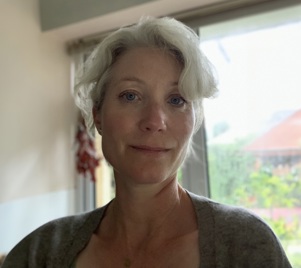 Over the years I have spoken to literally thousands of people about place, planning and architecture. I’ve learnt through these innumerable encounters that co-designing with communities can actively inform planning and place shaping, and that community experience and aspiration can create better places.
I use a psychogeographic methodology to understand how places shape people and, in turn, how people can shape better places. Psychogeography is the critical and creative study of how urban and built environments affect people psychologically and emotionally. It creates space for us to understand how places make people feel and furthermore how place is internalised to tell us not just where we are but also who we are.
An early example of this is a project I developed in Cardiff, in 2005, called ‘STAR Radio’. The STAR area of the city consists of Splott, Tremorofa, Adamsdown and Roath, each proximate but architecturally and culturally very different. I set up a six month research project where locals could come to our radio shop and be supported to direct a radio program about a facet of the area that interested them. Programmes included a tour of Phil’s allotment, a documentary by Liane and Jo, her partially sighted mother, a zombie radio play about the steel works, a history of Roath Park by the warden, and countless other programmes too numerous to mention.
In taking part, residents mapped STAR through its nuance. In total we made a 300-hour FM broadcast – a week of radio programmes – which linked together the intrinsic relationships between planning, architecture, local character, individual and collective stories.
This project was part of a broader regeneration of the area and was published by CABE (the Commission for Architecture and the Built Environment) as an example of best practice in public engagement. Ultimately, the project was exhibited at the National Museum of Wales, setting the unheard voices from the street in a national institution and framing the inter-relatedness of people, their stories, the places they come from and the cultures that creates.
The ebb and flow of engagement
STAR Radio underlined the fact that place is relational and it is formative; that engaging communities and designing places alongside local aspiration can and should influence planners and place makers. The project emphasised that insight into a whole system ecology should include stories, histories and lived experience to unlock greater potential for locally focused planning, design and regeneration.
I began to think about this complex relationship, the ebb and flow between people, place and community, in terms of ‘social prosperity’. Places that are dense in activity and rich in networks are also great places to live. Places that lack connectivity also lack social prosperity and, therefore, economic prosperity. This is something we are seeing right now, across the UK, on many of our high streets.
The art of engagement – or my preferred approach, co-design – is not simply the task of delivering a literal response. There needs to be an act of translation where local knowledge sits alongside the professional knowhow of planners, designers and local authorities. There needs to be place shaping teams who can collaborate and share ideas, problem solve and find consensus, in order to include communities in an agreed plan or project.
As a designer working with co-design, I see my role as first of all developing a creative strategy to connect with communities. To do this I draw on a range of tactics and approaches rooted in reading the city as a relational context. I use psychogeographic tactics such as recording conversations whilst walking, making and editing street interviews, working with maps and mapping, and developing creative action research approaches that draw out how places make people feel and, in turn, how they impact on behaviour, perception and local culture.
This approach is analogous to whole system thinking and a useful tool or research method for making complexity visible and mapping a wider breadth of issues. It is also a way to locate points of consensus and to test design solutions before they are drawn up or set out.
The second aspect of the practice is to work across the range of gathered material. This is about doing the imaginative work that joins dots across research to synthesise, ideate and then test emerging themes with communities by establishing feedback loops.
Some benefits of co-design
Regardless of the approach, here are some of the universal benefits of engaging communities, particularly in a co-design process.
Highly responsive solutions Co-design collaborates with communities who share local knowledge and deep insights that traditional professional planning might miss. This leads to outcomes that are more inclusive, accessible and user-friendly for a wider range of people.
Increased efficiency and reduced risk Testing and refining concepts with stakeholders early on streamlines the process. Addressing potential concerns during the design phase saves significant time and cost during implementation and reduces the risk of project failure.
Trust and community buy-in Active collaboration builds transparency and trust between planners and residents. This creates a sense of agency and shared ownership, leading to higher acceptance rates and smoother project delivery. It also avoids the village hall ‘show down’ where irate communities are asked to comment on already sealed plans.
Innovation through diversity Bringing together diverse stakeholders with different backgrounds such as frontline staff, technical experts, and local residents leads to more creative and innovative solutions than traditional, top-down approaches.
Long-term social impact Beyond the physical project, the co-design process can improve community capacity, foster social cohesion, and empower local voices to lead future initiatives.
An urban story 1: This is for the Majority
This is for the Majority is an evidence base and design framework for the London Borough of Tower Hamlets. The borough’s plan-making team was refreshing its local plan, which was one of the first in England to include a gender inclusive design policy. This is for the Majority used a range of engagement tools and co-design approaches to produce evidence on how women and girls experience streets and public spaces.
Going into the project I felt that the most important thing to do was to listen and to record as many perspectives and experiences as possible. Historically, the experience of women and girls has not shaped the urban context and, latterly, the focus of gendered experience has been on safety.
The impact of using a mix of engagement and co-design approaches on this project has been game-changing in terms of what the evidence shows. The project began with an open approach to scoping key themes and, because such a diverse group of women took part, the evidence shifted focus away from a singular and reductive focus on safety and design as a defensive strategy. Instead, the documents propose a new design language to create welcoming spaces, develop social infrastructure and to create active travel routes for wellbeing across the borough’s green grid.
To reach this understanding, I adopted an iterative approach and used participatory research to ask open-ended questions and record the daily complexity that women and girls manage.
I began the project by walking across the borough recording about 50 street interviews, which I edited and analysed to establish a set of significant themes. The audio was embedded in a GIS story map as part of the Local Plan regulation 18 consultation.This gave us a way to test these initial themes with other residents.
I went on to design a series of more in-depth workshops, including a digital walks series using Google Maps as a platform to share stories and experiences of specific places. I set up listening exercises through local community groups, created a survey and worked with community researchers.
In the analysis of the data I focused on what women and girls said they loved about the area, places they frequently used and activities they enjoyed. The evidence points to consensus about what works, where women and girls feel welcome, where they instinctively choose to go and the routes they use to get there.
Finally, working in collaboration with community researchers and a team at Queen Mary University of London we took these points in common as the starting point for a design charette where participants from across sectors worked together to imagine and design a framework that would help development managers put the evidence into practice. Five hundred women and girls took part in the project.
An urban story 2: The Queen’s Park retrofit
Engagement does not need to involve hundreds of people. I recently collaborated with Anna Odedun and Future of London on a project for Westminster City Council with Archio, to produce a co-designed retrofit strategy for hundreds of homes on the Queen’s Park estate in north west London. Rather than involve all residents, this study worked with a panel of 26 people from across the estate who were selected as representative of the mixed-tenure homeowners and tenants that lived there.
The panel met over nine months and took part in workshops that established what needed to change and how that could be achieved in the challenging context of improving Victorian workers’ cottages in a conservation area while realising shared goals that included improving resident health, boosting climate resilience and reducing fuel poverty.
Each session included hands-on worksheets, discussion points, journalling, group work and bringing in ‘expert’ voices to ensure panel members had capacity to make informed decisions.
The positive impacts of this engagement were again numerous. Archio were able to draw on the co-design process to produce a ‘Healthy Homes Guide’ and address ‘what’ needs to happen. An additional and perhaps unforeseen outcome of the sessions was also for residents to design a strategy addressing the ‘how’ and thinking through what would need to be in place to deliver the Healthy Homes Guide. This included ideas around collective procurement and more subtle outcomes around how to improve tenants’ experience and build trust and resilience.
The unintended and perhaps more tangible outcomes for participants were around community building. Participants described taking part as empowering through being seen and heard and building trust with teams at the council – who were active participants in the workshops. Meeting others experiencing similar difficulties moved people from frustration and isolation into an active problem-solving mind set. Hearing from experts helped residents to understand the baffling array of retrofit options available. Getting to know other residents sparked new friendships and Whatsapp groups that will hopefully provide ongoing agency and a collective voice.
Jennie Savage is a practice-based urbanist
Permission to play: An interview with Robin Hutchinson
Robin Hutchinson, Director of The Community Brain CIC, uses ‘play’ to draw people into their communities. He tells Simon Wicks why engagement must be a continuous process, and why giving people permission to have fun in the places they inhabit creates bonds that can underpin positive change in the built environment.
 “So we created this legend of a mythical goat boy, Lefi Ganderson, that defeats a giant, Thamas, to give the land back to the villagers of Seething [a district of Surbiton in south west London] on the understanding that the villagers must be opening, welcoming and embracing of others,” explains Robin Hutchinson, as if this were all completely normal.
“When we started to develop this Lefi Ganderson myth, and that Lefi makes the first cheese in the world and all of these other things that happen, we also ran a separate story allied to it, which was that Surbiton used to have a mountain. In the folk tale, Thamas lives atop this mountain, Lefi is found in a cave at the bottom. In his anger, Thamas smashes the mountain to pieces, and that’s the proof you need that the story is true, because Surbiton doesn’t have a mountain.”
Of course. Why would anyone assume otherwise?
I first met Robin 15 years or so ago when I interviewed him for the local Kingston and Surbiton Time and Leisure magazine. I was, let’s say, in the doldrums, and detached from the place I’d been living in for a decade. I needed a sense of connection.
I’d read a little about this group – this man, really – who did ridiculous things like parade through the high street carrying a giant goat boy, the alleged founder of Surbiton. Or who organised Surbiton Ski Sunday, where people skied down the hill above the high street with ice blocks strapped to their feet. Or who formed the Seething Town and Colliery Pit Band (they mined talcum powder, naturally). Or – the list of curiosities goes on.
It was very alluring, in a bonkers kind of way. But I knew no-one who could open the door for me, not Robin nor any of the other ‘villagers’. So I did what any halfway decent journalist would do and pitched an interview with the man behind the madness to the local magazine. The editor took the bait – unlike the non-existent fish at the Freshwater Sardine Festival – and I found myself welcomed into Seething and, at last, feeling as though I might just belong in the town I had com to call home.
Robin continues the tale. “We told people that every year that the community would come together for this massive festival to celebrate Lefi Ganderson and all the magic, wonderful things he’d done, and then as the area became more populated it died out. In 1921.” He’s very specific about the date.
“In 2009 I think it was, we decided we’d recreate the procession. It was due to set off at 3 o’clock on a Sunday from a builders’ merchant. At quarter to three there were five of us. At five to three there were 11 of us – and that’s a bus queue, not a procession. But at 3 o’clock, suddenly there were 200, 250 people there and what was clear was they wanted to believe, they wanted to play. And now we get between 700 and 1,000 people coming out every year.”
The antics of Seething are joyful and colourful and fun and they bring people together, of course. But they also embed themselves more deeply than you might think into the lives of the people who join in.
“It gives a place a different story,” Robin expands. “When someone asks ‘What did you do this weekend?’ you go ‘Oh my god, you’re not going to believe what we got up to’. It’s kind of playing with purpose.
“People have said to us they’ve changed their walk to the station to go through places where there’s been a festival, where they’ve experienced fun, and that the processions around the streets have given them the sense of ‘This is not the god of the car, this is the land of us’.
There. There it is, right there, coming at you from the side like a wary, but curious, fox.
But there’s more still, so much more.
A station story
Whereas 15 years ago, I met a surprisingly shy and nervous Robin Hutchinson in a cafe in Surbiton high street, this time I’m greeted with a hug in the car park of Tolworth railway station. I’m led first to a community kitchen in an abandoned taxi office and from there to the small room on the platform gifted by Network Rail to The Community Brain, the community interest company founded by Robin as a vehicle for exploring ideas about community engagement and participation in placeshaping.
Why Tolworth Station? Because it’s separated from the main Tolworth Broadway by a major highway, the A3, and the only way to reach it by foot is via one of several quite menacing underpasses radiating from a strange, equally menacing, pedestrian roundabout suspended above the A3. And because this dislocation is symptomatic of a place that has simply not been loved by planners or, indeed, anyone else, for such a very long time.
Yet the Broadway is flanked by a magnificent piece of 1960s Modernist architecture in Tolworth Tower, designed by George Marsh, who also conceived the more celebrated Centrepoint in central London. That’s now separated by the A3 from what was once the Toby Jug, the pub where David Bowie gave his first performance as Ziggy Stardust in 1973.
The A3 also divides Tolworth Broadway from Tolworth Court Farm and London’s largest rewilding project (Robin’s involved in that, too).
Tolworth, like everywhere, is a place with history, stories, meaning. But people have chosen to live there in order to leave it, via the A3 or the railway station with its direct line to London, the journey to which they tolerated but never enjoyed.
Robin’s solution to this urban alienation was typical: hold a picnic. On the roundabout. Paint a mural depicting the creatures found at Tolworth Court Farm in one subway and another celebrating 50 years of David Bowie in another. Host ‘Costa del Tol’, a beach party, in the station car park. Give people a reason to visit once, just once, then stand back and allow the alchemy to happen.
“Ninety-five per cent of local residents were totally unaware of Tolworth Court Farm fields,” Robin recalls, “and when that mural first went up, Facebook, that great arbiter of public opinion, was full of people saying ‘Why are you wasting your time? That’ll be vandalised’.
“Then, after about two weeks, these comments started appearing saying, ‘My children want to walk that way to school’. And when the second mural went in it was suddenly, ‘Isn’t this lovely? Isn’t this great?’. Every so often somebody would write ‘I don’t know why you’re wasting your time at Tolworth’, and suddenly local residents were writing ‘Don’t talk about where we live like that!’. That shift for us was seismic.”
Next came Baking Ideas, the community kitchen and meeting space for anyone who wants to use it, including start-ups. Then there was a silent disco at Waterloo Station, also celebrating Bowie. Now The Community Brain is working with Network Rail and South West Rail to spread the Tolworth joy through the south London network.
“All stations have been designed as places to leave,” Robin emphasises. “The only reason you go to the station is to leave it, and we began to ask the question: ‘What happens if you change the dynamic and make stations destinations for other activities, for community engagement, for social invention, for innovation, for small business start-ups?’. And could we start to play with that idea using Tolworth as the example?”
Now an artist-in-residence travels the network collecting stories from the people he encounters with a view, ultimately to “use their voices to re-imagine travel and trains”. Robin tells me that he also wants an artist-in-residence on the number 71 bus, “if I can swing it”.
There’s method to this madness. “So using transport as a way of engaging with people to allow them to…” as often with Robin, the thought trails, implied rather than said, as he sizes up a better route to the point before it all evaporates. “Most engagement exercises… If you want to kill my joy at an event after I’ve had a really good time, come up with a clipboard and ask me a series of questions. Or if you really want to get me riled up, invite me to a consultation with a load of drawings on easels and tell me that my opinion matters when, clear as day, the footings are already being done next door to me.
“The time to engage with people is when you’re not really asking them about anything like that. You’re asking them about where they find joy, where they find hope, what frightens them, what can we do to remove scariness, what do they feel about how they interact with people while they’re travelling.”
Happenstance and serendipity
Robin spent his early childhood in Oldham, north east of Manchester. At six, his family moved to south London. “We’re suddenly like, we’re in the car and the next minute we’re in a totally different…we’re in a new school. And my voice was different to everybody else’s, and it was ‘You speak funny, say that again’ and I became this kind of entertainment,” he remembers.
“Then about three months later in the school holiday we went back up to Oldham, and all my friends said ‘Don’t you speak posh now’ and I suddenly realised I no longer fitted anywhere, and how traumatic that felt. I think a lot of the stuff that we’ve done subsequently is about trying to ensure nobody should ever feel disconnected from their place, that everybody should have an open invitation to feel a right to be where they are and be respected for who they are.”
In 2000 he was diagnosed – to his relief – with bipolar disorder. Now he had an explanation for a career spent leaping from sector to sector, self-sabotaging at every turn.
“I’ve got myself into positions that most people would probably die for and then I’ll just chuck the whole thing in and go and do something else,” he laughs. “I was director of fundraising and communications at Guide Dogs for the Blind. I had a design and construction company. I ran a gallery. I’ve started and built theatres and art centres. Only twice have I deliberately tried to do what I want, and both times it was a disaster. My life is led by happenstance and serendipity, by two great gods.”
These gods have left him not merely with an “amazing repertoire of experiences” but a deep sense of the importance of belonging and the power of imagination to bring people into shared mental – and physical – spaces.
“I think I’ve always had to live inside my head, and it’s kind of like it’s a place of absurdity,” he confesses. “And I’m attracted to people who… laughter, not happiness but laughter, is really undervalued.”
He goes on: “A lot of the work we do is about how you create playgrounds, particularly for adults. We always say that there’s a point in near enough everybody’s life when they ran in a playground with their coat upon their head thinking they could fly, and we go ‘And you can’. But it’s not physically, it’s in the mind that we need to give people back the right to feel like that again.”
Engagement unleashed
Where does planning come into this? Robin’s philosophy is that you don’t wait until a development is proposed before building relationships with communities.
“The danger [for planning] is always being the ambulance for the accident and not seeing the accident about to happen,” he explains. “So we begin to talk about how people are consulted while either the accident is happening in front of them or it’s too late. Therefore, their commentary on it is already framed by a certain series of activities and events.
“Whereas, all of us who have agency – and let’s talk about boroughs for a moment – should be in a continual state of teasing and questioning about space and place, so you’re actually trying to gauge from people much earlier not do they like this brick or this brick, should it be that high or that high, but how should it feel? What do you want when you talk about where you live?”
Though the execution may sometimes be elaborate, the philosophy is simple and it’s effective. “It’s about unleashing engagement before you need to engage, unleashing imagination before you’re asking, showing drawings, it’s that first stage of what might be possible here.”
It’s time to leave the station, like the trains whose noisy arrivals and departures have punctuated our conversation. We hug, again. We say we mustn’t leave it so long next time. But it doesn’t really matter how long it is, because we’ll always pick up where we left off.
I’ve never managed to fully run with the “permission to be brilliant” that Robin has given me, and everyone else – many of my projects remain on the drawing board of my imagination. After a decade of living in Surbiton, however, I did start working for a magazine about planning and place. Now I’m the editor and I feel that I’m exactly where I need to be. There’s no plan here, just happenstance. And serendipity. Now there’s a curious thing.
Robin Hutchinson is Director of The Community Brain CIC
Towards a narrative of place
The places we live in are not just constructions of bricks and concrete and asphalt, but a locus for stories, both collective and individual. If planning truly wants to forge meaningful connections with the communities it alters, then planners must find a new language with which to talk about place, writes Matthew Morgan
 Places are like books, written over time. On one hand, they are works of non-fiction – of hard truths written in brick, laid in tarmac, and grown through plants and trees. On the other hand, they are grand, sprawling works of fiction, woven together through countless different perspectives by an endless cast of unreliable narrators.
Consider the place you live. How would you describe it? Now, how would your neighbour describe it? What about the local shopkeeper, the council, or a housing developer?
Each would reveal a completely different perspective, a different truth. Each of their accounts contains not just the grand joys and agonies of life – the births, deaths, lifelong friendships, and fallings out – but the beautiful, overlooked mundanity of the everyday.
The story of a place is built on walking the dog, waiting for the bus, or taking out the rubbish in the rain. If we extended this cast of narrators to the local wildlife, the canopy of trees, or the weathered facades of old buildings, we would unlock ever deeper repositories of stories. Here, memories in place become the ghosts of past lives, layered one on top of the other.
Yet, open up a local planning policy document or a viability assessment, and this lived reality vanishes. The messy, vibrant poetry of neighbourhood life is flattened into rigid spatial allocations, while complex financial spreadsheets calculate how to extract maximum profit from every square metre of earth. We have allowed the hyper-local narrative to be ghostwritten by algorithms of financial optimisation, where the plot is driven entirely by land values rather than human values.
Before entering the world of planning and development, I was a children’s author. Coming from a background rooted entirely in character, plot, and emotional resonance, I am frequently struck by the often alienating way in which investment, planning, design, and development are explained.
We have rarefied and commodified the built environment to the point of clinical detachment. Too often, the story of a place is told either in dense, technocratic language accessible only to a select few in planning offices or council chambers, or in cold, hard financials that are stripped of any human meaning or sense of everyday lived experience. This naturally lends itself to the cynical, but entirely justified, public belief that everyone involved in the process is a villain, only in it for the money.
The standard volume housebuilding model captures this narrative tragedy perfectly. It is a linear timeline that starts with land acquisition and ends with sales. The first phase is treated like a dark art, obfuscated by behind-closed-doors speculation, strategic options, and land-flipping. The final phase has become a recipe for mediocrity. Marketing brochures boast of “unique character” through the creation of identikit ‘vibrant hubs’, backed up by meaningless national customer satisfaction scores. The result is a physical product that everyone – from the planners who approve it to the families who buy it – knows is as sub-optimal as it is formulaic, deserving of a better ending for everyone involved.
In this way we are mass-producing plagiarism, and in the process consigning places to the bargain bin.
The anatomy of a place-based story
So, how do we rewrite this script? How do we plot a successful narrative for a place, and how do we ultimately achieve a happy ending?
To do so, we must look at the development process through the timeless lens of classic story structure.
The protagonists: In a healthy, sustainable planning narrative, the protagonist cannot be a single heroic entity. It must be a collaborative force comprising the local community, the long-term investor, the visionary architect, and the civic-minded developer working in tandem.
The villain: Every compelling story requires a powerful antagonist. In our world, the villain is not a specific person, but the housing system itself. It is a system predicated on short-term profit maximisation, tethered to an archaic, car-dominated transport network, and vulnerable to local political cycles that seem to get more spasmodic and short-sighted with every passing year.
The story arc: This maps the progression of events from an opening scene to its final resolution, forging a chain of cause and effect where actions have clear consequences. It is what gives a book its momentum – the reason we read on. In spatial terms, this arc might take the form of a masterplan, a theory of change, or a community statement. But whatever the vehicle, a meaningful story requires a clear sense of purpose, driven by a deliberate push for positive change.
The barriers: Just like the obstacles a hero faces in a traditional plot, the process of building homes and neighbourhoods is fraught with natural tension. Questions of financial viability, site accessibility, infrastructure deficits, and entrenched local opposition are not reasons to abandon the story; they are the creative constraints and narrative hurdles that our protagonists must face and overcome to achieve the outcomes they seek.
The happy ending: It is in these positive outcomes that the happy ending lies, which every place should aspire to. In a truly great story, a happy ending cannot be reserved just for a privileged few characters; it must be shared. In the built environment, this means rewriting our goals around health equity and the fundamental right to live happy, healthy lives. A successful place-based narrative is one where your postcode doesn’t determine your life expectancy, where clean air, green spaces, and the ability to walk or cycle to the shops or local school are woven into the plot for everyone, not just those who can afford the premium.
Everyone likes a happy ending. But to achieve a resolution that satisfies both the people and the land, we must stop relying entirely on formulae and jargon. We need to start defining the actual, human outcomes we are seeking to achieve. Only by embracing a true, place-based narrative can we stop building mere units, and start authoring communities that are actually worth reading about.
Matthew Morgan is Director, Quality of Life Futures
Lessons for practitioners
We asked our contributors for their top engagement tips for planners. This is what they said.
Nikki Davies
Take engagement to the people; don’t expect them to come to you. Traditional consultation attracts a narrow, often oppositional audience. Meet people in their everyday spaces to reach a broader, more representative group.
Speak like a human, not a planner. Ditch jargon. Say ‘homes’ not ‘units’, ‘funding for parks and schools’ not ‘CIL’. Clear language builds understanding and trust.
Focus where you can make a difference. Don’t burn energy trying to convince the inconvincible – invest time in finding and engaging those open to listening and engaging constructively.
Rachel Edwards
Remember that you’re asking people to live through change. Lead with empathy. Most major projects are about transformation. Whether it’s a new housing development, a road, a school or energy infrastructure, you’re asking people to change how they live, work or relate to a place that’s often part of their identity. That’s uncomfortable. Don’t dismiss that. Acknowledge it, demonstrate empathy and recognise that people’s concerns are real.
Bring communications in early and bring the future into the present. Communications shouldn’t start once plans are finalised. Involve communicators from the outset so you can help people understand why change is happening, not just what is being built or how. If a project won’t be complete for five or ten years, ask: are there ways people can experience some of the benefits now? Pilot ideas. Test them. Learn what works. That builds trust, starts earning social licence and helps you understand what meaningful social value looks like before the ribbon is ever cut. Where we are is intimately connected with who we are. If you want people to embrace change, you have to help them see themselves in the future you’re creating.
Be creative. Shared experiences build trust. People rarely connect through planning documents. They connect through stories and shared experiences. I’ve used creative writing, storytelling, performance, music, play and sport because they’re universal ways of bringing people together.
Rachel Brisley
Engage early. This is often not done because of concerns around managing expectations (for example, funding may not become available, a plan may change, development may not occur). But as long as this is explained properly, it’s far better than leaving it too late.
Engage the right people. It seems obvious, but often representative organisations aren’t that representative! The hard to reach may often be the majority. Use local groups to engage them and involve people with lived experience wherever possible.
Engage via feedback. Ensure that you let the people who’ve participated know the outcome and why the decision was made. Failing to do so can lose community trust and impact future engagement.
Jennie Savage
Collaborate. Find what is already happening locally and set up partnerships, listen and learn.
Share the love. Well, the cash, where you can pay people for their time and input and support local projects.
Make it fun/relevant/social. And be clear about how taking part will shape changes.
Robin Hutchinson
Setting. Try to find a place of ‘neutrality’ to hold your engagement. Try to find a place of ‘neutrality’ to hold your conversations, too many places have troubling echoes for people.
Welcome. Greet everyone and make sure they feel welcome – opinions are formed from the moment people arrive. Set the scene and try to see it through the eyes of your participants rather than from you or your organisation’s view. Explain what is going to happen and what is hoped for and, if you can, try to encourage people to relax and enjoy it.
Tone. Keep a positive tone – if you go into engagement expecting problems you can accidentally invite them. The tone you set will be that adopted by others, it’s important in encouraging people to be honest.
Matthew Morgan
Make the community a co-author, not a consultee. A good story has no single hero. Build feedback loops into the brief itself, and structure engagement so the same voices aren’t relied on at every stage. This means inviting different groups in at different points, rather than treating one consultation event as the be-all-and-end-all.
Write for readers, not planning committees. Viability assessments and masterplans rarely mean much to the people they affect. Translate them into short, honest ‘what this means for you’ summaries, with specific audiences in mind, and offer information in formats and languages that reach people beyond the confident and literate.
Check your story holds water. Sense-check your project against the Quality of Life Code of Practice’s eight principles – Be Accountable, Be Effective, Be Transparent, Be Inclusive, Be Timely, Support Mutual Learning, Demonstrate Impact, and Publish Feedback. Quality of Life Futures (formerly Quality of Life Foundation) offers a free self-assessment against these standards at qolf.org/code-of-practice.