Case study: Perth and Kinross
You can read the case study in full below or download as a Word or pdf version.
Contents
1. Case study summary
2. Context: Local Heat and Energy Efficiency Strategies (LHEES) in Scotland
3. Development of the LHEES and Local Area Energy Plans (LAEPs)
4. Collaborative governance during the LHESS and LAEP development
5. Role of local authority planners in preparing the LHEES and LAEP
6. Key recommendations from this case study
1. Case study summary
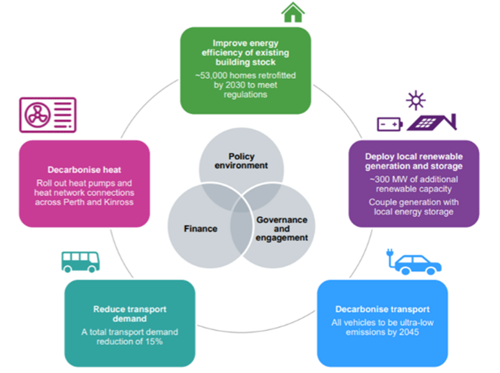
- Perth and Kinross Council have published both a Local Heat and Energy Efficiency Strategy (LHEES) and a Local Area Energy Plan (LAEP). They are now in the process of updating their local development plan.
- This case study illustrates the benefits of fully involving the local authority planning team in the development of the LHEES and LAEP.
- The example provides useful recommendations regarding the need to align energy and spatial plans and the need for closer alignment with national town planning policy.
2. Context: Local Heat and Energy Efficiency Strategies (LHEES) in Scotland
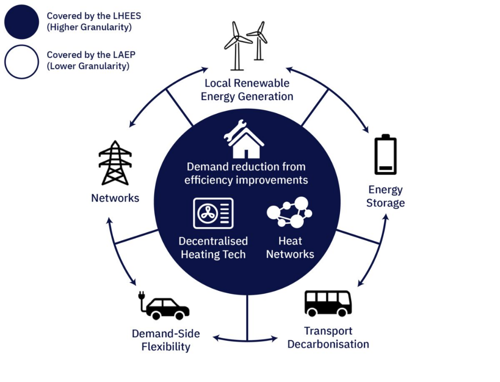
Perth and Kinross Council, along with all other local authorities in Scotland, has a statutory duty to develop a LHEES and update it every five years. The LHEES is intended to provide a long-term framework for enhancing energy efficiency and lowering greenhouse gas emissions from heating systems in buildings and to align with both national and local targets. A LHEES must include both a strategy and a delivery plan, ensuring a structured approach to achieving these goals. Although LAEPs are not a statutory requirement, Perth and Kinross Council opted to develop a LAEP alongside the LHEES to support a more comprehensive approach to local energy planning.