
RTPI Chief Executive Rachel Fisher explores the purpose and art of planning and the profession's collective responsibility.
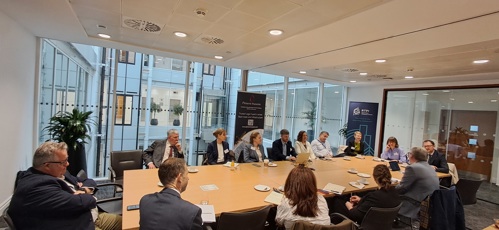
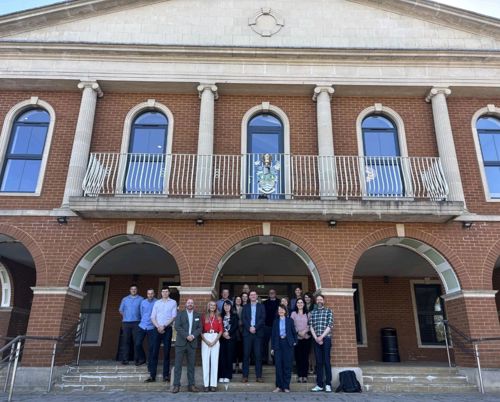
Over the past few months, I’ve had the opportunity to spend time with RTPI members, partners and stakeholders across the UK and Ireland. From Cardiff to Belfast, Dublin to Leeds I’ve been struck by the diversity of roles that planners undertake.
Local authority officers, consultants, academics, developers, researchers, everyone I met is working in very different contexts, often with very different day-to-day pressures and priorities. And yet, across all of these conversations, one common thread has stood out:
Planning, no matter where you are, is fundamentally about collaborating in the public interest.
A shared purpose, expressed in different ways
Planning can sometimes appear fragmented from the outside. Different sectors, different systems, different geographies each with their own dynamics and challenges.
At UKREiiF, conversations about the future of planning systems returned repeatedly to questions of both deliverability and trust; highlighting the role of the planner not just to deliver development, but to do so in a way that serves society as a whole.
This isn’t just true in the UK and Ireland, colleagues at the World Urban Forum in Baku said the same; planning is about balancing interests in a way that delivers outcomes beyond those of any single stakeholder. Done well, planning makes places that are more than the sum of their parts.
Operating at the intersection of interests
What makes planning distinctive as a profession is that it sits at the intersection of multiple, potentially competing, objectives:
- economic growth and social value
- development and environmental protection
- local and national priorities
Those working in the public sector often sit closest to these tensions, which get played out politically. But the same dynamics are present across the profession.
Private sector planners play a critical role in shaping proposals that are deliverable, viable and aligned with broader policy goals. Academics and researchers contribute evidence that informs better decision-making. Those working in the voluntary and community sectors bring vital insights into lived experience and local context.
Each of these roles is different — but each contributes to the same overarching aim: ensuring that change happens in ways that serve the wider public good.
The importance of trust and confidence
Acting in the public interest is not always straightforward. It requires making decisions that may not satisfy all parties, and doing so in environments that are often complex, contested and highly visible.
In this context, trust is critical.
Trust in planning systems. Trust in institutions. And importantly, trust in planners as professionals.
Across my travels and conversations there was a shared recognition that while planning is central to many of today’s biggest challenges, its role is not always fully understood or appreciated.
Too often planning is seen as a barrier, rather than an enabler; its success is measured in terms of process, rather than outcomes.
Reinforcing the idea that planners operate in the public interest is therefore not simply a matter of professional identity. It is essential to building the confidence and legitimacy that effective planning requires.
A collective responsibility
Through our Royal Charter we are clear that planning is a profession rooted in the public interest, this means that we have a collective responsibility.
Whatever sector we work in, we must be confident in articulating the value of planning to the wider public, to government, and to those we work alongside.
Looking ahead
The good news is there is growing recognition across governments and industry of the need for more strategic approaches to planning. I’ve had really encouraging conversations about the need for national spatial planning, and about how we manage land use at a city-regional scale, and the importance of community support for new development that reflect a wider shift towards thinking more deliberately about the future.
The RTPI has a key role to play in bringing together different parts of the profession, convening conversations across sectors, and ensuring our collective voice is clear.
But ultimately, this is a responsibility that sits with all of us.
Because whether working in the public, private, academic or third sector, planners share a common purpose:
To shape the future of places in a way that serves society as a whole.