

Raymond Abogonye Ph.D is an RTPI Licentiate with an MSc in Infrastructure Planning and Sustainable Development from Oxford Brookes University and an MBA in Development Economics and International Development.
 England’s mandatory Biodiversity Net Gain (BNG) regime, now embedded in the planning system following the Environment Act of 2021, carries an implicit promise: that habitat creation and enhancement triggered by development will be directed toward the places and landscapes where nature most needs it. That spatial promise rests almost entirely on Local Nature Recovery Strategies (LNRS). Yet more than a year into mandatory BNG, the relationship between LNRS, Local Plans, and individual BNG assessments remains frustratingly ambiguous; increasingly looking more like a polite aspiration than a working mechanism. For planners in the South West, a region of extraordinary ecological richness and mounting development pressure, this ambiguity is not an abstract policy concern. It is a live, consequential problem.
The alignment gap: what the policy assumes, and what It delivers
Let's look at the statutory framework for example. The statutory framework assumes a logical sequence: where the LNRS identify priority habitats and ecological networks; Local Plans translate those priorities into planning policy; BNG assessments then direct habitat delivery toward those identified priorities. In practice, the chain breaks almost immediately, and that is where the issue lies.
LNRS are produced by ‘responsible bodies’, typically counties or combined authorities, but carry no statutory weight in planning decisions. They are a material consideration, not a policy requirement. Local Plans, meanwhile, are in varying stages of preparation across the South West, and many were adopted before the LNRS process had meaningfully begun. Individual BNG assessments are driven by the Biodiversity Metric 4.0, which prioritises measurable unit uplift over spatial strategic value.
The result is that ecologically significant habitat creation can, entirely legally, occur in locations that offer little strategic value, disconnected parcels remote from priority networks, created to satisfy a metric rather than to serve a landscape. In the South West, where Atlantic rainforest remnants, chalk stream headwaters, ancient lowland meadows, and the upland peatlands of Dartmoor and Exmoor represent genuinely irreplaceable ecological assets, this matters enormously.
Regenerative Land Stewardship: a framework the system has not yet found
If LNRS are to function as genuine spatial backbones rather than advisory maps, they must be populated not just with habitat priority areas but with other more viable delivery mechanisms. One of such mechanism is the “Regenerative Land Stewardship” (RLS) model. Here is an approaches that prioritises the restoration of ecological functions, soil health, and landscape-scale connectivity rather than isolated habitat parcels; offering the planning system something it currently lacks: a coherent bridge between strategic intent and ground-level delivery.
Agri-environment schemes, particularly the Sustainable Farming Incentive (SFI) and Countryside Stewardship Higher Tier, are already delivering habitat management across substantial areas of the South West’s farmland. Yet these schemes operate largely in parallel with BNG rather than in formal alignment with it. I have seen farmers/landowners (across North Wessex Downs, Cranborne, The Cotswolds, Mid-Devon, etc.) managing species-rich grassland under Countryside Stewardship while simultaneously being approached as a potential off-site BNG habitat providers, with no formal mechanism connecting these activities to LNRS spatial priorities.
Planners should be advocating loudly for a formal protocol linking agri-environment scheme uptake to LNRS priority mapping, creating a coherent, multi-funded delivery landscape rather than a patchwork of uncoordinated interventions.
Community-led rewilding: the missing voice in LNRS spatial priorities
One of the more significant omissions in the current BNG framework is its limited accommodation of community-led ecological initiatives. The South West has a particularly strong tradition of community-rooted land stewardship, from parish-level wildflower verge management schemes in Somerset to community land trusts acquiring farmland for nature recovery in Cornwall. These initiatives typically operate at the granular spatial scale where LNRS priorities most need to be realised, yet they sit outside the formal BNG delivery architecture.
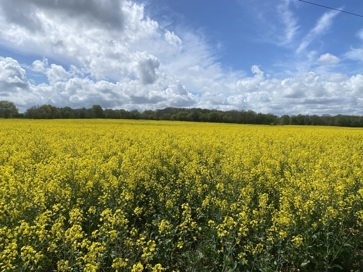 Planners can change this. Local authorities have the power to require, through Local Plan policy and pre-application engagement, that off-site BNG habitat delivery preference is given to sites identified within LNRS priority areas, and that community stewardship bodies are formally recognised as eligible habitat management organisations. If this sounds like a radical departure from existing law; it is not. This would be a deliberate, policy-driven exercise of the discretion the planning system already provides.
Natural England’s statutory biodiversity credit system offers a compensatory fallback, but this should be a last resort. The primary aim must be to build functioning ecological partnerships between developers, landowners, farmers, and communities; partnerships that the LNRS’ spatial priorities give meaningful direction to.
What planners in the south west must do now
The LNRS-BNG alignment problem is not primarily a legal one. It is a professional one; a failure of the planning system to exercise its existing discretion with sufficient ecological ambition. The South West’s planners are well placed to lead a different approach, and here are three action steps that are particularly urgent:
- Embed LNRS spatial priorities explicitly into Local Plan BNG policies, requiring that off-site habitat delivery demonstrate spatial alignment with LNRS priority areas as a condition of acceptability, not merely as a desirable outcome.
- Establish formal working protocols with agri-environment scheme advisers and Farming and Wildlife Advisory Groups to map scheme uptake against LNRS priorities, identifying gaps and directing BNG delivery toward them.
- Recognise and formalise the role of community stewardship organisations within Local Plan BNG policy, creating a pathway through which community land trusts, wildlife-focused parish partnerships, and rewilding charities can access BNG funding streams as legitimate delivery vehicles.
Conclusion: coherence is a planning choice
The BNG system will not spontaneously align with LNRS priorities. Markets, metrics, and minimum compliance thresholds do not produce landscape-scale ecological coherence, rather, deliberate planning does. The South West stands at an inflection point: it has the ecological assets worth protecting, the community stewardship tradition worth building on, the agri-environment uptake worth coordinating, and the professional community capable of making the connections the system has not yet made for itself. The question is whether the planning profession will exercise the ambition the moment demands, or allow two well-intentioned systems to remain in polite, expensive parallel.
This blog post is written by a guest author, and their opinions may differ from those of the RTPI.


