Thriving communities in well designed places with access to quality homes and infrastructure
Latest Welsh Government data:
- 8,700 homes needed per year during the next Senedd term (mid point estimate)
- c.5,700 market homes (65%) and c.3,000 affordable homes (35%) per year
- Plus existing unmet need of 9,400 affordable homes (64% increase since 2019)
Wales is currently experiencing a housing crisis, statistics from Shelter Cymru show that over 90,000 households on the waiting list for social homes and over 10,000 individuals in temporary accommodation, including many children. Statistics from the Welsh Housing Monitor show that overall completions of new homes have fallen short of identified housing need in recent years.
Over the five years from 2019/20 to 2023/24 completions totalled 26,482 an average of 5,296 per year, 28% below the 7,400 a year requirement identified in the national plan. Housing of all tenures should be recognised as critical infrastructure. This requires a joined-up approach to meeting the pressing housing need in Wales, in line with the Well-being goals set out in the Well-being of Future Generations (Wales) Act 2015. https://sheltercymru.org.uk/build-new-social-homes/Welsh Government statistics show that between 2024 and 2025, 3,643 additional affordable homes were delivered across Wales. This is a 12% increase on the previous year and the highest total since data was first recorded in 2007 to 2008 Affordable housing provision: April 2024 to March 2025 [HTML] | GOV.WALES.
However, during that same time period, overall numbers of new homes fell - “3,798 new dwellings were started, 26% fewer than in the previous year. This marked the lowest number of new dwelling starts on record”. New house building: April 2024 to March 2025 [HTML] | GOV.WALES
- 24,000 second homes + 11,400 holiday lets, some authorities with 7-8% of dwellings as second homes
- households in temporary accommodation more than tripled since 2015, social lettings are at a 20-year low
- average house price in Wales is 5.86 x earnings, rents rising faster in Wales than any UK nation since 2023, 37% of private tenants spend over 30% of income on housing
Source: RTPI Measuring What Matters (2020)
We call for the reintroduction of housing targets and monitoring of delivery to support the delivery of housing, including the pipeline for social housing, post 2026. It is vital that Local Planning Authorities and the Welsh Government all provide up to date, accessible and reliable data that builds a strong evidence base and supports monitoring and improvement. The lack of a housing target for Wales and the cancellation of Technical Advice Note 1 has had the unintended consequence of creating a ‘Plan-only’ system in Wales rather than a ‘Plan-led’ system. In this context, there is no safety valve to continue to deliver urgently needed homes if Local Development Plans (LDPs) are delayed.
If Local Development Plan adoption is unavoidably delayed, a ‘safety valve’ is needed to enable appropriate development to continue. This is not about bypassing the planning system or reducing quality standards or criteria for sustainably-located development. It is about ensuring that a procedural delay does not prevent us from addressing the housing crisis.
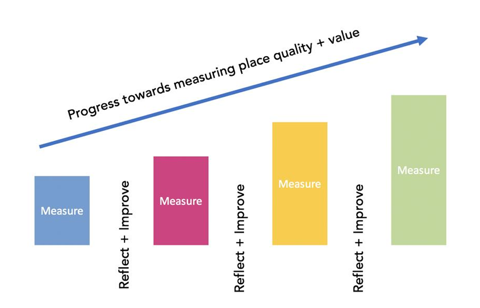
Measuring outcomes, along with spatial targets for different parts of Wales is an integral part of the long-term delivery of social housing. The RTPI’s Measuring What Matters Research (2020) considers how the outcomes of planning decisions can be measured, going beyond simple metrics like the number of homes delivered and includes analysis of placemaking aspirations and socioeconomic and environmental value and quality.

A Plan-led system needs to be accompanied by delivery of allocated sites and the associated infrastructure needed to support the new development. When the market is not bringing forward allocated sites or brownfield regeneration, Councils have the powers but lack the resources and confidence to utilise compulsory purchase powers.
A single national body, similar to Homes England, with a clear delivery mandate could proactively assemble land and either install infrastructure and bring developable sites to the market, or develop them itself. This will reduce risk and bring confidence to the public and private sectors, and ensure that development is sustainably located and accompanied by transport investment and infrastructure provision.