An ambitious and agile Plan-led system that provides certainty for all stakeholders
Source: valueofplanningwalestoolkit2018.pdf (2018)
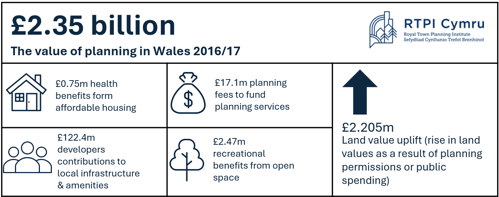
A well-resourced planning system is crucial for a thriving economy in Wales: it ensures that development aligns with the needs of communities and provides certainty for investors. In 2018 the estimated Value of Planning in Wales was £2.35 billion, highlighting its importance to the economy, resilience, health, and equality.
Source: Public Sector Resources Landing Page | Championing the power of planning (2025)
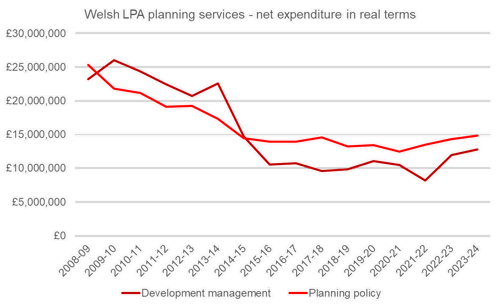
However, the planning system in Wales faces significant challenges due to a lack of investment. Between 2009-2024 planning budgets had fallen by 43% in real terms. At the same time, the breadth and complexity of issues that planners must grapple with has grown, as have stakeholder expectations. This perfect storm has meant their Local Planning Authority does not currently have capacity to deliver planning ambitions or strategic goals, with the focus instead on surviving/fire-fighting (Public Sector Resources Landing Page | Championing the power of planning (2025).
Planners balance economic, environmental, societal and cultural demands and play a key role in the provision of homes and jobs, addressing the climate and nature emergencies, supporting green growth and the rapid transition to net zero carbon. It is vital that the planning system is adequately resourced to ensure that it can support the Welsh economy to its full potential.
Wales’ Plan-led system can only work if LDPs are adopted in a timely manner. The current process is slow, does not always effectively engage communities, and is too expensive and risky for SME builders to take part.
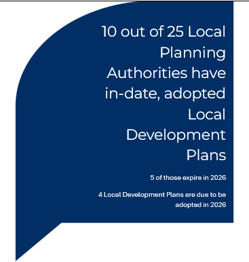
Up-to-date development plans provide certainty to investors and communities allowing places to grow and develop, meeting the needs of rural and urban communities and focusing on sustainable and healthy places. Meaningful engagement in Plan-making involves early and effective engagement between planners and communities, local organisations and businesses, infrastructure providers, developers and investors and various other stakeholders.
If Local Development Plan adoption is unavoidably delayed, a ‘safety valve’ is needed to enable appropriate development to continue. This is not about bypassing the planning system or reducing quality standards or criteria for sustainably-located development. It is about ensuring that a procedural delay does not prevent us from addressing the housing crisis.
The planning system has a role to play in supporting the Welsh Language. RTPI Cymru’s consultation response on the ‘The future of Welsh-speaking Communities: call for evidence’ argues that this is best achieved via robust Welsh Language Impact Assessments as part of Local Development Plan preparation or for detailed development-specific Impact Assessments for proposals that are not in line with LDP site allocations.

The Planning (Wales) Act consolidates a confusing mountain of legislation that has built up since 1990. It will make the legislation more accessible, and allows future changes to be incorporated, maintaining this accessibility and clarity. We welcome the Planning (Wales) Act and urge that the new government sees the project through to completion.
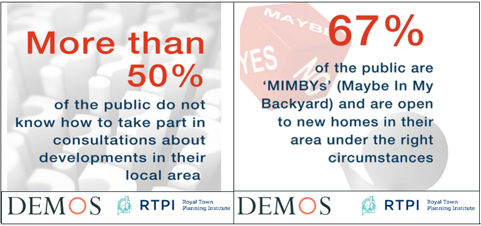
A Plan-led system supports community engagement, enabling people to shape where they live and work. Planning is a key tool in addressing the true needs of people in Wales and delivering government priorities. However, a Welsh government survey in 2018 showed that almost three quarters (72%) of the Welsh population agreed with the statement ‘I don’t know much about the planning system in Wales’, and only 19% disagreed.
RTPI research (2025) also shows that only 12% of people feel they have a say in the outcome of planning decisions. It is important that the public know how and when to engage effectively, and that there is clarity about the parameters of engagement.
By championing meaningful engagement in Plan-making and placemaking by strengthening community understanding of the planning system, we can ensure communities are heard and are involved in shaping their places.
Source: