
Bell Close, Bristol entered by BDP
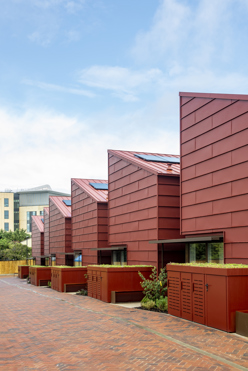 BDP’s Gap House for Bristol City Council transforms a redundant garage site into nine sustainable, affordable homes, demonstrating how small and overlooked urban plots can deliver meaningful housing. The project uses high-performance structural insulated panel system, allowing the homes to be built efficiently on the constrained site while achieving excellent thermal performance. Designed to maximise space, daylight and privacy, the scheme carefully fits into the surrounding neighbourhood while creating comfortable, energy-efficient homes for residents. Gap House illustrates how innovative design and construction can unlock tight brownfield sites and help address Bristol’s need for high-quality,
Hazelmead Cohousing, Bridport entered by Barefoot Architects,
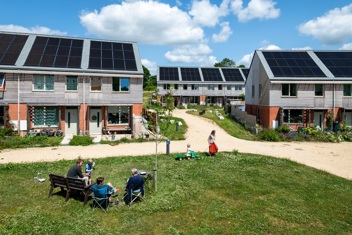 Hazelmead, located on the outskirts of Bridport within the Dorset National Landscape, is the largest completed cohousing development in the UK. The scheme, spearheaded by Bridport Cohousing Community Land Trust, comprises 53 climate-resilient homes, a common house, and shared green spaces. The project balances integration with the natural landscape and access to local infrastructure. Designed to the AECB CarbonLite New Build Standard, the project reflects a commitment to affordable, sustainable, and community-focused living for a mixed-tenure, multi-generational neighbourhood.
McArthur’s Yard, Bristol entered by Nash Partnership, Hill Group and Guinness Partnership
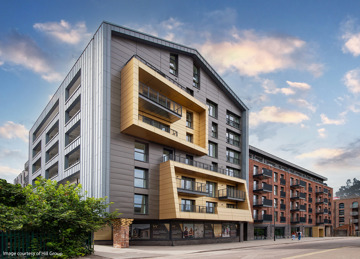 McArthur’s Yard regenerates a long-derelict harbourside site in central Bristol. It delivers 142 new homes across three buildings, with over 65% affordable housing, including shared ownership and social rent. The development also provides flexible commercial space and a ground-floor café, supporting local jobs and activity.
The scheme, which finished in September 2024, completes the regeneration of Bristol’s harbourside while strengthening the adjacent waterfront pedestrian route. Sustainability measures achieve over 27% CO₂ reduction beyond Building Regulations, alongside biodiversity enhancements including green roofs and wildlife habitats, creating a vibrant, inclusive and sustainable new residential community in a sensitive historic setting.