
The North West planning year: A review of 2025

You can read our review in full below or download a pdf version.
Contents
Chair's review
Chair’s review of the year
Sponsors and hosts
Regional life
RTPI North West Awards for Planning Excellence 2025
RTPI National Awards
Education, Careers and Mentoring Task Group 2025
Congratulations to our newly elected Chartered and Associate members!
Babies!
RTPI North West dinner 2025
RTPI President’s visit 2025
Planning Aid North West in 2025
LPA Engage: 2025 Progress and Plans for 2026
Biodiversity Net Gain through an LPA's lens
EDI champion update
North West Young Planners 2025
Manchester archives and local studies research evening
Regional research and good practice
Policy and Research Task Group Report for 2025
Guest academic articles
Institutional diversity in community-led housing: Lessons from the Global North for North West England
Design Codes at the street edge: Lessons for the North West
Looking forward
Chair’s review of the year
Welcome to our 2025 annual review!
 2025 AD…
….was a year when planning kept reforming and we kept adapting. I’d only just digested my team Christmas lunch, when the new NPPF hit my inbox. The days before Christmas then seem to be a blur of last-minute shopping and interpreting national policy. Grey Belt took up our grey matter, “no takeaways” was a big takeaway and “beautiful” clearly wasn’t hot anymore. In the midst of this new era however, we all pulled together. Within minutes of publication, RTPI members had posted comparison docs and summaries. Within days, RTPI NW volunteers had prepared a new CPD programme.
Ben Vickers, 2025 Chair
“Build, baby, build!” is the instruction we received recently from our new housing secretary Steven Reed. The slogan has since adorned ‘MAGA’ style red caps, distributed at this year’s labour party conference. Will we see members sporting red caps at planning committees in 2026? Only time will tell.
Some of the highlights of my year as Chair of RTPI NW include:
- RTPI President Helen Fidipe visiting our region. Officers from Stockport Council and Port Sunlight Trust both hosted inspirational tours, showcasing some of their key achievements. Our tour of Stockport concluded with a short ceremony, where I was honoured with a shopping bag adored with the slogan “Stockport isn’t Sh*t!”. I couldn’t agree more.
- I was delighted to see the RTPI Early Career Research Grant applicants begin their RTPI NW funded projects on the themes of older person’s housing, hot food takeaways and skills. More to come next year…
- Hosting at the RTPI Annual Dinner at Kimpton Clock Tower. To everyone who attended, I hope you enjoyed it was much as I did. Thank you again to our sponsors: CMS, Richborough, Kings Chambers and Places Matter. The Dinner is RTPI NW’s main fundraising event. Without it, we wouldn’t be able to do what we do for our members.
- Seeing RTPI NW’s ‘LPA Engage’ programme continue its momentum. LPA Engage is a portfolio of projects delivered specifically for our region’s officers. We’re trying to do our bit to help address public sector skills gaps and provide officers with networking opportunities, maybe even a bit of respite. This year’s flagship project delivered three design training days, subsidised by RTPI NW’s reserves.
On the subject of ‘Making things great again’, it’s great to see a resurgence of the public sector this year. Some of the older heads I meet, will reminisce about an RTPI consisting equally of both private and public sector members. Unfortunately, over the last decade or so, RTPI membership amongst officers had been in freefall. The reasons are systemic, but RTPI NW’s projects are clearly helping to address this trend. I have been the first RTPI NW Chair from the public sector in a decade. There are however now, more officers applying to join RTPI NW’s committees now, than I can ever recall. As I step down, I do so knowing that there won’t be another decade that goes by, without a public sector chair.
My final words are to congratulate Darren Muir on his accession to RTPI NW Chair. Darren is a passionate advocate of planning and has a big heart, shown by longstanding commitment to helping communities and those less fortunate via Planning Aid. I must also sincerely thank our Regional Coordinator, Bev Watson. Bev enables everything to happen.
Enjoy our review of 2025.
See you in 2026 AD(!)
Ben Vickers
RTPI NW Chair 2025
A big thanks to our 2025 sponsors and hosts:
Regional Life
In this section we look at what the North West Region, its planners and volunteers, have achieved in developing and rewarding, best practice in 2025.
RTPI North West Awards for Planning Excellence, 2025
2025 has been a bumper year for our prestigious regional awards with a total of 24 entries received across a range of categories. The standard of entries was high leading to 21 being shortlisted for site visits, presentations, and interviews across the following categories:
- Excellence in Plan Making Practice
- Excellence in Planning for a Successful Economy
- Excellence in Planning for Heritage and Culture
- Excellence in Planning for Health and Wellbeing
- Excellence in Planning for Communities (large schemes of 50 or more homes)
- Planning Authority of the Year
- Small Planning Consultancy of the Year
- Mid-Size Planning Consultancy of the Year
- Young Planner of the Year
- John Knight Award.
The judges set off in the minibus for two full days of site visits, travelling across Greater Manchester, up to Preston and South Ribble and down to Ellesmere Port. The judges then embarked on the difficult task of debating and deciding winners and commendations for each of the categories which were later announced at the North West’s Annual Dinner in June 2025.
The planners/teams involved with this year’s category winners and commendations should be incredibly proud and an extra congratulations to those who went forward to the national awards – with some brilliant results for North West entries.
Our amazing judging panel included representatives from across the public and private sectors, who brought varying experiences to the judging process:
- Jake Crompton – Awards Task Group Leader – Stonebond
- Chris Hartley– Awards Sponsor – Lambert Smith Hampton
- Chris Findley – Retired from Salford City Council
- Holly Froggatt – Homes England
- Jade Corcoran – Salford City Council
- Jo Gregory – Urban Imprint
- Joanne Harding – Knowsley Council
- John Copestake – Freelance Chartered Town Planner
- Nia Borsey – Fisher German
Entries to the RTPI North West Awards for Planning Excellence 2026 open in January 2026, and we encourage you to consider submitting an entry for schemes that meet the criteria (please liaise with Bev Watson beverley.watson@rtpi.org.uk in the first instance if you are unsure or need some advice).
The Winners
The winners were announced at our Annual Dinner on Thursday 19th June, at the Kimpton Clocktower Hotel, Manchester, and kindly sponsored by Lambert Smith Hampton.
Excellence in Plan Making Practice
Winner
The Trafford Design Code (submitted by Trafford Council)
The Trafford Design Code is a borough-wide digital plan creating certainty in design and development. Funded through the Pathfinder Programme, it aligns with national design principles while allowing for innovation. Developed in-house, it promotes sustainability, inclusivity and accessibility, ensuring high-quality development which is landscape led. Extensive community engagement shaped its content, leading to design codes which reflect the community’s aspirations for new development. The Code’s digital format improves accessibility and usability. It has gained national recognition, influencing other local authorities and being cited as an exemplary approach to design coding and using guidance innovatively.
"The Design Code stands out as a forward-thinking example of how policy can be created and implemented in a way that is both practical and visionary. The decision to lead this work through the Development Management team was particularly commendable, bringing unique insight and a pragmatic approach to a traditionally policy-driven process. It is evident that hands-on involvement of DM officers, supported by extensive testing on real proposals, ensured that the Design Code is both implementable and relevant and is a good example of best practice in action.
"It is pleasing to see how the Design Code is already having a meaningful impact, including upskilling officers, improving design quality and acting as a blueprint for other LPAs. Your willingness to share knowledge through RTPI and PAS events further amplifies the influence of this work, positioning Trafford as a leader in design coding and digital planning innovation.
"Overall, this was a very strong and impactful submission, and the team should be proud of delivering such a comprehensive and replicable model of plan-making. We encourage you to continue building on this foundation and look forward to seeing how the Trafford Design Code continues to shape places and inspire others."
Commended
Excellence in Planning Making Practice
Stockport Town Centre Residential Design Guide (submitted by Stockport Council and Planit)
Stockport Town Centre is going through a £1 billion transformation which includes ambitious plans to significantly increase the town centre residential offer. As such, the design guide outlines clear expectations to ensure new homes contribute to Stockport’s vision of a thriving, inclusive, and liveable town centre. It is intended to support developers, designers, and decision-makers in shaping new development.
The guide was a collaborative effort, shaped by stakeholder engagement from a wide range of specialist officers, industry experts and the local community. As such, the guide covers a range of multi-disciplinary topics essential for successful town centre living.
Excellence in Planning for a Successful Economy
Winner
Co-op Live Arena (submitted by Deloitte LLP)
Co-op Live, the UK's largest arena, is a 23,500-capacity venue in Manchester designed to be the country's most sustainable. It aims to be a catalyst for economic growth and regeneration in East Manchester by attracting world-class events and creating over 2,000 jobs. The project prioritised community engagement, incorporating feedback on transport, local employment, and accessible design, reflected in its Attitude is Everything Gold Status. Co-op Live is committed to achieving net-zero carbon operation by 2038 through energy efficiency, renewable energy use, and biodiversity enhancements.

Co-op Live Arena
"The judges were impressed with Co-op Live, the UK's largest arena, in all aspects. The social, environmental and economic benefits for this area of East Manchester have been carefully considered and delivered. This excellent project embodies community engagement and sustainability while contributing effectively to placemaking and having a hugely positive impact upon the local economy. Furthermore, the planning role clearly embodied a collaborative approach and best practice.
"With regards to community engagement, a robust strategy with an extensive reach was implemented ensuring the project team were aware of the community’s needs and aspirations with feedback directly shaping the development. The sustainability credentials of the project are remarkable from the reuse of a brownfield site near a tram stop to the development of an energy efficient building built from recycled and responsibly sourced materials with PV panels, an enhancement of the canal walkway, and a commitment to achieving net-zero carbon operation by 2038. The emphasis on community engagement, inclusivity, and sustainability makes this an exemplary project.
"The project's ability to integrate multiple objectives (i.e. placemaking and design to climate action and community engagement) makes it a strong example of economic development."
Commended
Excellence in Planning for a Successful Economy
Animate (submitted by Preston City Council and Maple Grove Developments Ltd)
Animate is a £45m+, 100,000 sqft mixed-use, city centre commercial development by Preston City Council, built on the footprint of the former 1960’s concrete indoor Preston Market.
A vibrant leisure, entertainment and cultural destination, inspiring community and business connections, celebrating Preston’s rich cultural heritage and driving economic growth and regeneration.
As the first completed project in a £200m+ city centre investment programme within the city’s historic Harris Quarter, and the first major step on our ambitious regeneration journey, Animate’s purpose is to spark pride in every Prestonian as we shape a more prosperous city for the future.
Excellence in Planning for Heritage and Culture
Winner
Theatre Porto, Ellesmere Port (submitted by Cheshire West and Chester Council, Theatre Porto, Equans, Bennetts Architects, Lambert Smith Hampton
Theatre Porto championed the reuse of a rich heritage of buildings for the benefit of people, communities, and the environment. It has seen the restoration of a locally listed Victorian manor building and transformed it into a new cultural hub for its local community. Situated in the heart of Whitby Park, the building has been extended with a new purpose-built auditorium, replacing previous detrimental additions to the original building.
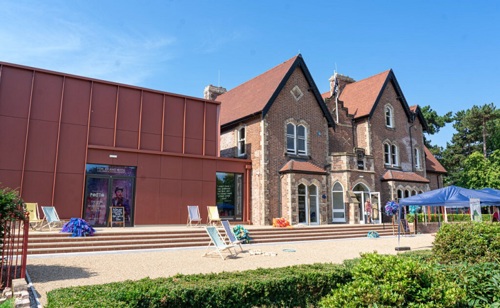
Theatre Porto, Ellesmere Port
"The project has achieved a high standard of energy efficiency utilising innovative methods to heat and cool the theatre space. This has benefits from a sustainability perspective but also is of great benefit in reducing energy costs for the theatre.
"The careful thought that had gone into the design and the collaboration between the design team, planners and the theatre was evident in the submission and when judges visited the site. The building was previously uninviting but has now become a community hub and an integral part of Whitby Park. The role of the Local Planning Authority was also acknowledged in scaling back the size of the extension and seeking a design solution that best complemented the setting of the locally listed building.
"This is an excellent project that showed real ambition whilst remaining entirely focused on those that it was designed to serve. The project clearly builds upon the incredible work that was already being undertaken on the site and has enabled the reach of that work to be extended and the benefits further reaching."
Commended
Excellence in Planning for Heritage & Culture
Rochdale Town Hall (submitted by Rochdale Council)
The restoration of Rochdale Town Hall has recently been completed under the banner of 'A Town Hall reborn'. Rochdale Town Hall is widely regarded as one of the UK’s finest examples of Victorian gothic architecture. The Grade-I listed building was designed by William Crossland and opened in 1871 as a symbol of the town’s industrial standing in the textiles trade. Community involvement has been at the heart of the restoration, with hundreds of volunteers learning new heritage restoration skills and participating in the archaeological research to enable the new public square that's been delivered for the people of Rochdale.
Excellence in Planning for Health and Wellbeing
Winner
Paterson Redevelopment Project (submitted by Turley)
A world leading cancer research facility has been completed in Manchester facilitating the co-location of clinicians and scientists into a single building adjacent to the renowned Christie Hospital.
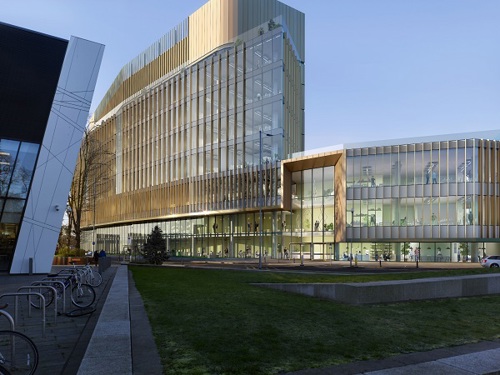
Paterson Redevelopment Project, Manchester
Designed around the principles of ‘Team Science’ the new facility will provide the opportunity for specialists to work side-by-side understanding and tackling the diversity and complexity of cancer, accelerating the speed at which ground-breaking research can be translated into personalised treatments and driving better outcomes for patients across the world through the very latest breakthroughs and discoveries.
"The Paterson Redevelopment adjoins the main Christie hospital site and brings teams of clinicians, scientists and researchers into one building. The Christie is Europe’s largest cancer treatment centre, and the ambition of integrating clinicians, scientists and researchers into one building is to accelerate the translation of cutting edge research into patient care. This involves bringing significant numbers of people (965 staff) together under one roof, with cutting edge health facilities, and that requires a significant amount of floorspace on a constrained site.
"The design challenge was to do this in a way that results in a building that integrates well with its surroundings. The judges felt that the Paterson achieves this with great success. A nine storey building on such a prominent frontage could have been problematic, but excellent design and materials creates a bold statement building which nevertheless sits comfortably with its neighbours. The street frontage is particularly impressive, the extensive use of glazing, the setting back and cantilevering of the building to create a wide pavement, and attractive use of landscaping and planting create a welcoming approach to the building’s entrance.
"The judges consider that the Paterson Redevelopment is an outstanding achievement and recognise its potential to help transform cancer research and care at The Christie. It has been achieved through close collaboration between the Christie and its partners, BDP, Turley as planning consultants, and Manchester City Council (a Strategic Regeneration Framework laid the foundations for the successful outcome that has been achieved). It is a worthy winner in its category, and the project team should be very of their achievements."
Excellence in Planning for Communities (large schemes of 50 or more homes)
Winner
Jubilee Gardens (submitted by South Ribble Borough Council)
The scheme has been named Jubilee Gardens with reference to the Queen's Platinum Jubilee in 2022. Jubilee Gardens is a £20.5 million investment for South Ribble to provide 75 apartments with supported living facilities including a café, hair salon and support services. By introducing the extra care provision, this will ensure residents gain access to a high-quality housing which allows them to maintain their independence whilst at the same time ensuring access to vital support.
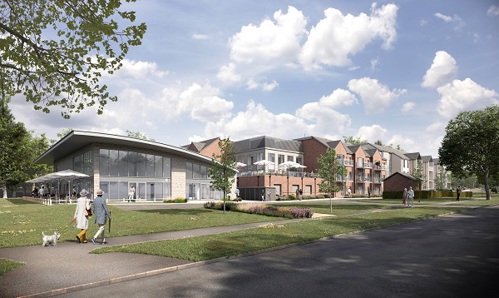
Jubilee Gardens, Leyland
"The judges were impressed by how the development had been made to fit into the local area with a mix of public and private spaces within the building and landscape. The LPA has worked hard to strike a balance between delivering a high quality scheme whilst also being commercially minded in the face of potential viability/budget constraints linked to the development. The building finish and materials are of high quality and visually, the development sits well within the street scene.
"The site visit allowed the judges to see just how well the project is able to address climate change, nature emergencies and accessibility. The biodiversity enhancements and sustainable drainage systems have been delivered on site but with ample green space remaining for general amenity use by future residents. Hard landscaping measures have been introduced to provide informal meeting spaces and community social areas outdoors. The development as a whole is well thought out with the end users (over 55s) in mind.
"The judges were interested to learn how the planners formed part of a wider multi-disciplinary team and the role they took in bringing the development forward. The planning journey was of interest, recognising that the allocation for typical employment uses was no longer appropriate in that location and the Council took action to deliver a more appropriate use for the site."
Commended
Excellence in Planning for Communities (large schemes of 50 or more homes)
Stanneylands (submitted by David Wilson Homes)
Stanneylands is a development of 174 well-designed, energy efficient homes within a nature-rich setting, with a strong sense of place and character.
Set within an area of mature green fields and woodland, the design of the scheme creates a sense of place with viewing corridors from the entrance through to existing woodland and good pedestrian connectivity to public open spaces.
Some 30% of the affordable homes are interspersed across the development and have the same specification as the open market properties, providing homes that are energy efficient and cheaper to run, all within an inclusive community.
Planning Authority of the Year
Winner
Trafford Council, Planning and Development Services
Trafford Council is an exceptional Local Planning Authority, driving continuous service improvement. It leads in digital planning with its innovative in-house Design Code developed by development management planners. A creative approach is taken to recruitment, particularly in enforcement, where two officers have entered through non-traditional routes, including an apprentice who left school at 16. The Planning Service champions diversity supporting inclusive and accessible development and fosters new talent through the formation of specialist teams and career progression. Climate-conscious development is a priority, with the Trafford Design Code incorporating energy efficiency, green infrastructure, and resilience into future planning strategies.
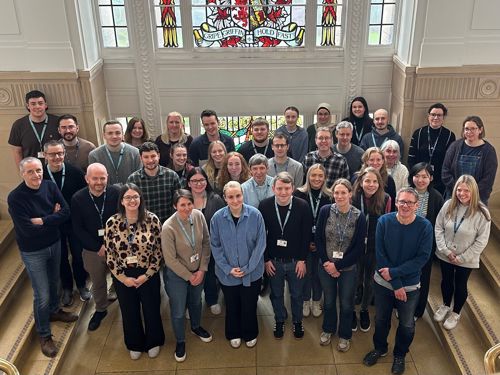
Trafford Council, Planning and Development Services
"Trafford’s Planning and Development Service includes Major Planning Projects, two Area Development Management teams, enforcement and trees, spatial data, validation and planning business support. Of the 48 staff 34 have a professional planning qualification.
"There is clearly a lot of innovation going on at Trafford, and the overall impression is of a happy and busy team who pull together to get things done. Like all local planning authorities Trafford have faced significant resource challenges in recent years, and it has met that challenge by providing opportunities to grow the experience and skills of its own team by providing opportunities for staff to lead on challenging but rewarding work – the Trafford Design Code being an outstanding example. Rather than using external consultants to deal with work pressures Trafford’s approach has been to successfully use its own team to produce important pieces of work, letting them develop their own skills to the wider benefit of the service. Following the disruptions caused by the Covid pandemic the team has effectively dealt with the backlog of applications and reduced extensions of time, again using members of the team. Allowing development management staff to get involved in areas of project work, so developing their skills base and applying their practical expertise outside of “traditional” development management, has been an excellent approach.
"Resource challenges mean that, like all local authorities, there is little money to pay for staff training. Trafford has dealt with this challenge in a number of innovative ways, including developing a good system on in-house training and mentoring. Staff retention levels are high, which speaks volumes about staff morale. The testimonials provided reflect a service that is widely respected, with client and stakeholder satisfaction regarded as an important outcome for the service.
"In a year with a strong field in this category, the judges considered that Trafford’s Planning and Development Service are worthy winners, and an exemplar to other local planning authorities."
Commended
Planning Authority of the Year
Stockport Council
Planning shapes places, we put our residents at the heart of what we do. We strive for excellence, and we are exceptionally proud of the place we serve. Our collective drive and determination to ensure that the policies we make and the decisions we take ensure that Stockport continues to be a great place to live work and thrive runs through everything we do. We embrace the power of planning to deliver for the public good, do not shy away from challenging situations and encourage each and every one of our team to excel.
Small Planning Consultancy of the Year
Winner
Made it Together
The MIT team are planning experts. They offer well considered planning advice that saves clients time and unlocks opportunity.
They listen, taking care to understand the needs of clients and collaborators. They put themselves in the picture to understand the dynamics and find the angles.
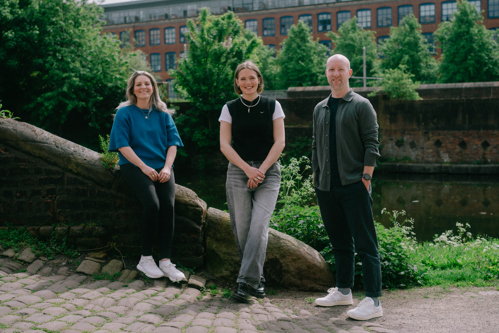
Made It Together team
MIT are people focused and care about the journey and the objectives. They believe in giving back more than they take and providing opportunities for all.
They believe in collaboration and doing things the right way through fostering personable and enjoyable working relationships.
"Made It Together is a small but dynamic consultancy team committed to planning better, more inclusive places through meaningful collaboration with clients, designers, and communities. Their submission impressed the judges with its energy, clarity, and evident pride in both individual and collective achievements over the past year. The team demonstrated a rich breadth of experience, delivering multiple high-quality planning solutions while choosing to challenge conventional methods.
"Their emphasis on doing things differently stood out—particularly their open, honest, and collaborative approach to navigating the complexities of the planning system. By striving to understand diverse perspectives and working towards shared goals, Made It Together has built strong relationships and trust with those they serve. This was clearly reflected in the outstanding range of client and community testimonies supporting their work.
"The judges were impressed by Made It Together for their genuinely innovative and fresh approach, recognising them as a team that is not only making a difference, but also reshaping how planning consultancy can be done."
Commended
Small Planning Consultancy of the Year
Wignalls Chartered Surveyors
Wignalls are a one-stop shop for all property services, primarily focusing on providing planning, surveying, and valuation advice, with a specialty in agricultural diversification projects in the north-west of England. Wignalls help farmers, landowners, and members of the local community unlock the potential that their land holds, providing bespoke advice tailored to their needs and their budgets, taking projects through the planning process, to surveying and marketing the site on their behalf. The Wignalls team are passionate about making planning more accessible and driving positive economic, social, and environmental change, primarily in rural areas.
Mid-Size Planning Consultancy of the Year
Winner
Cassidy + Ashton
The C+A team strives to challenge itself continuously, enabling all staff to be involved in a wide range of projects at different stages to foster professional growth and collaboration. The Planning system, it is something that affects most people's lives on a daily basis and so something we should all engage with. As a small team in private practice, engaging with a wide portfolio of stakeholders, we are well placed to work on facilitating development and shape the world around us, exemplified through the case studies in their entry.

Cassidy + Ashton team
"From a single planner at inception, the team has grown to what is currently a team of six, comprising four Chartered Planners, one Licentiate member and one Student member.
"The team’s expertise and skillsets are evident through a range of both private sector and public sector experience which has helped foster professional growth and collaboration within the team.
"Cassidy + Ashton’s passion for planning was a particular highlight, with a strong track record of delivering successful and socially responsible projects through innovative approaches to town planning. The team’s ability to tackle complex challenges, especially in heritage and social housing projects stood out for the judges, as did their commitment to genuine community engagement. The integration of sustainability and climate-conscious strategies, especially in the adaptation of historic buildings, further strengthened their approach to responsible planning."
Commended
Mid-Size Planning Consultancy of the Year
Zerum
Zerum offer a unique and refreshing approach to consultancy, always encouraging the team to think smart, yet outside of the box. Zerum work nationwide across two offices, based in Manchester and Leeds, and are currently engaged in projects across a range of sectors, including residential, student accommodation, retail and leisure, offices, and energy schemes. Zerum believe in smart thinking and flexibility in approach; we pride ourselves in offering genuine care and working towards achieving the best end result for the client.
Young Planner of the Year
Winner
Hannah Mitchell (Stockport Council)
Hannah has excelled in planning over 8 years, notably at Stockport Council since 2021. She has embedded design skills and a passion for place, leveraging her expertise from public and private sectors. Hannah leads on design for planning policy, supports development management, and has crafted policies for the local plan, including education contributions. She developed the Town Centre Residential Design Guide and secured funding for a skills audit and training. As Design Champion and Place Advocate for the North West, Hannah drives change and supports colleagues not only in the council as well as mentoring students.

Hannah Mitchell, Young Planner of the Year
"The judges were impressed with Hannah's significant achievements in her 8-year career, particularly her role in embedding design skills and a passion for place within Stockport Council. Her work on a variety of projects, from the Town Centre Residential Design Guide to leading the development of a borough-wide Design Guide, shows a clear commitment to improving the quality of design in the borough. Her advocacy for social infrastructure, particularly in ensuring developments contribute to educational provision, is another notable achievement.
"Hannah’s leadership skills and ability to drive change are evident, as is her commitment to professional development, both within the council and the wider planning community. Her active involvement in the RTPI as well as being Place Advocate for the North West further demonstrate her dedication to the profession.
"Hannah comes across as a real team player and offers support to colleagues as well as to others entering or at an early stage of the profession through volunteering and mentoring. It is clear she is a passionate and gifted planner who will continue to thrive, and the judge’s considered Hannah is an inspiration to the next generation of planners."
John Knight Award
Winner
Bob May (Ryan and May)
We are proud to name this award after John Knight in recognition of his 50+ years of inspirational voluntary work. John continues to promote the planning profession.
 Bob May has 40-years’ experience as a planner working in the public, private and voluntary sectors where he has constantly demonstrated a significant and inspirational commitment to the RTPI and planning within our region. Following graduating in 1986 from the university of Manchester he worked for several rural and urban planning authorities before joining Turley in 1994 where he rose to became part of the national leadership team, Head of Expert Witness and Chair of their Charitable Trust until he left in 2015 and later up his own consultancy Ryan and May. Bob has been an active member of the RTPI in the north-west being chair of the region (2005/6) and speaking and chairing a myriad of CPD events. He has gone on to serve on a number of Planning Schools Partnership boards in the North-west and Yorkshire.
As part of his career, he was an early advocate of the move away from ‘development control’ to ‘development management’ and pioneered the use of hybrid planning applications on complex retail led projects over 20 years ago. He has undertaken a significant amount of voluntary and charitable work, both in the UK and abroad, ranging from working with planners in Sierra Leone, to Homelessness charities in Ancoats. He was made a Fellow of the RTPI in 2017 in recognition of both his leadership skills, contribution to the RTPI and commitment to guiding and mentoring early career planners. Bob is highly regarded by his clients, colleagues, and planners across the region, known not only for their technical expertise, sound judgement and approachable demeanour, but also for his honesty, discretion, and professional integrity.
RTPI National Awards
The winners of the RTPI National Awards were announced on 27th November at a ceremony in London. For the North West:
- Co-op Live was also awarded Excellence in Planning for a Successful Economy
- Trafford’s Design Code was Commended in the Excellence in Plan Making Practice a
- Made It Together took home Small Planning Consultancy of the Year Award
- Hannah Mitchell was Commended in the Young Planner of the Year Category.
Education, Careers and Mentoring Task Group 2025
Over the past year, the Education, Careers, and Mentoring Task Group has continued to strengthen its role in promoting planning as an accessible, rewarding, and diverse profession across the North West. Building on the foundations laid in previous years, we have focused on expanding our reach, deepening our partnerships, and developing initiatives that connect aspiring planners with meaningful opportunities.
As always, our aim remains consistent, to raise awareness of planning among students, career-changers, and communities who may not yet be familiar with the profession, while providing our members with valuable avenues for engagement and mentoring. It has been yet again an inspiring year for the team with the strength of our relationships
Expanding our reach and strengthening partnerships
This year, the task group has continued to evolve its approach to outreach, exploring new and creative ways to engage prospective planners across all stages of education—from primary through to postgraduate level. Although opportunities naturally fluctuate from year to year, we have remained focused on sustaining and strengthening relationships with our core partners, including local and combined authorities, universities, schools and third-sector organisations. These partnerships are vital to broadening our reach and deepening our impact, while ensuring that delivery remains manageable for our volunteer-led network.
Collaborations with organisations such as Regeneration Brainery and a range of regional education and careers partners have enabled us to share best practice, refine our outreach methods and tailor our activity to meet the diverse needs of communities across the North West. These relationships are central to our long-term goal of creating inclusive, sustainable pathways into the planning profession—particularly for young people who may not otherwise be exposed to, or consider, planning as a viable and rewarding career option.
Over the past year, Ambassadors have participated in 22 outreach events across nine boroughs in the region. Notably, this included our first large-scale online session, where Ambassadors presented to hundreds of pupils from multiple schools simultaneously. This format proved highly effective and efficient, enabling us to raise awareness of planning among large audiences while reducing travel demands and maximising volunteer time.
We have also developed a growing partnership with Positive Footprints, an organisation that supports 584 schools—predominantly within the North West—and has engaged more than 45,000 children through its career-focused programmes. In recent months, the Education team has contributed to Positive Footprints’ pilot Careers Carousel initiative at YHA Trafford Hall. During these events, three primary schools from inner-city Liverpool attended, and the RTPI had the opportunity to speak directly with every child in small groups throughout the day. Alongside three other employers, we also supported wider team-building activities designed to build confidence and broaden students' exposure to different professions.
This collaborative approach has not only expanded our reach but has also helped us deliver richer, more meaningful interactions with young people—laying stronger foundations for future engagement and awareness of planning as a profession.
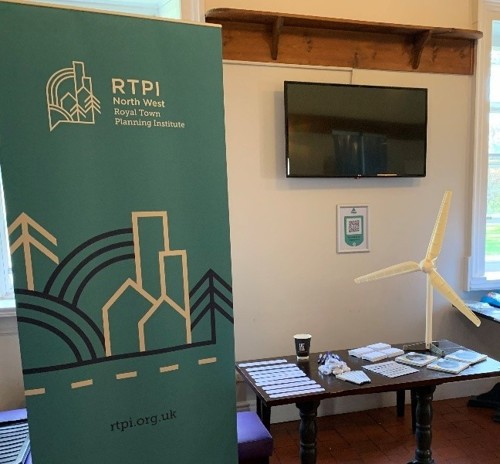
Positive Footprints Event – YHA Trafford Hall
Supporting young planners and students
The task group has continued to work closely with the Young Planners network, recognising that coordinated activity and shared objectives significantly amplify our collective impact. By aligning our efforts, we have been able to deliver a more seamless offer to students and early-career planners, ensuring they benefit from consistent messaging, access to a broader range of role models, and more coherent pathways into the profession. Joint initiatives—ranging from careers events to panel discussions and mentoring-style interactions—have provided greater visibility for planning as a career and created richer, more engaging learning experiences for those at the earliest stages of their professional journey.
Our ongoing support for university-based activities, including speed-networking sessions, skills workshops and career-focused events, remains a cornerstone of our engagement strategy. These sessions offer students direct access to practising planners from across the public, private and third sectors, helping them build confidence in professional settings and develop a more nuanced understanding of the varied roles within planning. Feedback continues to be overwhelmingly positive, with students consistently reporting that these interactions help them expand their networks, refine their career aspirations and gain valuable insight into the realities of working in the profession. By maintaining a strong and visible presence within universities, we continue to play a key role in strengthening the transition from education to practice and supporting the development of the next generation of planners.
Embedded Career Module – University of Liverpool
For the third consecutive year, the RTPI North West’s Education and Careers Taskforce, in partnership with the University of Liverpool, has advanced an embedded approach to employability within planning education. This work responds to a growing sector-wide need for graduates who not only possess technical expertise but also demonstrate strong professional awareness and transferable skills. The initiative aligns closely with the RTPI’s Core Strategy and its ongoing education policy review, both of which highlight the importance of strengthening relationships with accredited planning schools and enhancing students’ understanding of the Institute’s role and the diversity of career pathways within the profession.
To deliver on these ambitions, the University introduced an authentic, project-based learning experience for first-year planning students. Working collaboratively, students examined how the RTPI and the wider planning profession are supporting town centre regeneration across the Liverpool City Region. The task required students to engage with real-world planning documents, sector research and professional perspectives, culminating in a digital storytelling assessment and a mock CV and placement application exercise designed to help students translate their learning into employability evidence.
This initiative significantly enhanced students’ opportunity awareness, industry insight and confidence at a formative stage of their studies—particularly valuable given the limited access first-year students typically have to formal work experience. Students reported gaining meaningful exposure to professional planning practice, a clearer understanding of the distinct roles within the public and private sectors, and practical skills that will support their future career development. By integrating experiential, credit-bearing employability activities early in the curriculum, the project ensures a more equitable starting point for all students, strengthens self-efficacy and encourages proactive career management from the outset of their degree.
At a time of acute workforce shortages across the planning profession, particularly in the public sector, this collaboration demonstrates the positive impact that early engagement with professional skills and career exploration can have in supporting progression into the field. It also helps broaden awareness of the diverse roles and opportunities available to emerging planners.
This year, the module exceeded expectations once again. Following another strong response from students, it went on to receive the Sir Alistair Pilkington Award—an internal University of Liverpool honour that recognises excellence in learning and teaching and the delivery of a high-quality student experience. The Taskforce would like to take this opportunity to congratulate our University of Liverpool collaborators, particularly the academic and employability teams, and in particular Tom Moore and Dominique Price, for their continued dedication and leadership in delivering this impactful project.


BBC Bitesize – Careers Tour
This year, the RTPI North West was delighted to take part in the BBC Bitesize Careers Tour 2025, a high-profile, interactive outreach programme designed to inspire young people about the wide range of career opportunities available to them. Supported by a full professional production team, the tour engages more than 110,000 secondary school students nationwide over a six-month period. Its aim is simple but powerful: to showcase the diversity of careers “on your doorstep” and to broaden students' horizons at a formative stage in their education.
Each event features a panel of three professionals from different industries who share their experiences, career journeys and advice. Through dynamic presentations and live interaction, the sessions are designed to motivate students and encourage them to think more creatively about their own futures.
In November, the RTPI North West was invited to join the panel at De La Salle School in St Helens. Representing the Institute alongside a Laboratory Technician from the University of Liverpool and an apprentice from the BBC’s production team, an RTPI Ambassador delivered engaging presentations to more than 950 students aged 11–15 throughout the day.
Each session included:
- Short presentations from each organisation, outlining their roles and career pathways
- An interactive careers quiz, during which a student volunteer joined the stage to answer questions that helped identify potential job matches
- A lively Q&A segment, where students asked a wide range of questions—from what planners actually do to, unsurprisingly, “How much do you earn?”
Adding to the energy of the event, the session was chaired by Fee Mak, a BBC Radio 1Xtra DJ, whose presence brought additional excitement and credibility to the day. Their facilitation helped maintain a vibrant and engaging atmosphere that kept students enthusiastic and attentive.
This event represented a significant opportunity to raise the profile of the planning profession among young people and to showcase the value and impact of planning in shaping local communities. Participation in the BBC Bitesize Careers Tour has helped further embed the RTPI North West within regional careers outreach, ensuring that planning is represented alongside other prominent and aspirational career paths.

Could You be an Ambassador?
The RTPI’s BALANCE programme remains central to our long-term outreach strategy. By engaging schools throughout the region, RTPI Ambassadors help raise awareness of the profession among young people who may not otherwise encounter it.
As part of the Future Planners initiative, Ambassadors attend careers fairs, deliver talks, and support activities designed to widen access to the profession. The task group is keen to expand the number of active Ambassadors across the North West and encourages members to volunteer if they are interested in representing the RTPI and sharing their career journey.
Acknowledgements
We extend our sincere thanks to all volunteers who have contributed their time and expertise over the past year—whether through careers events, mentoring and school presentations. Your support is vital to the success of our work and continues to have a meaningful impact on those exploring planning as a career.
Alex McLaren
Alexander Lomax
Alexander Gaskell
Alexander Snow
Amy Owen
Ben Mclachlan
Bethany Thornton
Brooke Evans
Cait O’Dowd
Camilla Carruthers
Charlotte Greenhow
Charlotte Lloyd Randall
Dan Crane
Dana Abara
Danielle Sammy
Eleanor Rigby
Eleanor Dunn
Ellen Macleod
Emelia Jeffery
Emily Darnell
Emma Sheppard
Francesca Opoku-Gyamfi
Gemma Burton
George Bissett
Georgina Cox
Harry Painting
Harry Russell
Jacob Landers
Jake Challinor-Smith
James Walkington
Jay Davies
Jessica Jones
Jill Paton
John-Michael Chidwick
Jonah Carty
Katharine Forbes
Kerry McCartney
Louis Hatchett
Lydia Gallagher
Lydia Connell
Matthew Lam
Matthew Tuersley
Megan Turner
Melissa Webster
Michal Laskowski
Nadezhda Wigglesworth
Natalie Mortlock
Oliver Price
Patrick Swallow
Paul Chandler-King
Ragini Dutta
Robert Devon
Sara Manson
Shanshan Li
Shaun Knights
Sophie Cragg
Thomas Scullion
Thomas Godley
Tracy Awanyo
Wing Lam Kenneth Jim
Yi Ching Ho


Also, congratulations to 2026 Chair Darren Muir for marrying long term partner Drew in Central Park, New York in 2025!….


RTPI North West dinner 2025
This year’s annual dinner was a star spangled event, once again hosted in the majestic and historic Kimpton Clock Tower Hotel in Manchester City Centre. It was delightful to see people from across the whole of the North West region descend on a particularly hot summer’s day for this annual get together of the movers and shakers within the regional planning world.
Once it got too hot to reasonably be seen in a tuxedo, the temperature further warmed to a fascinating key note speech by TV star Rob Rinder. It was delightful to note the evident passion of the guest speaker’s appreciation of what effective planning can achieve.
We’re already looking forward to next year’s annual dinner and can’t wait to welcome you
We asked the designer to create a 2 Page collage of photos.
Take a look at the photos from the evening.
RTPI president’s visit 2025
On Friday 13 June, RTPI NW welcomed the visit of RTPI President Helen Fadipe, where she was given a tour of some of our region’s treasures: Stockport and Port Sunlight, accompanied by Benjamin Vickers (RTPI NW Chair) and several committee members.
Our tour began in the brutalist masterpiece of Stopford House, where we met colleagues from Stockport's Planning and Building Control service, led by Emma Curle, Assistant Director of Place Making and Planning. Emma’s footwear sent a clear message there would be much walking to follow. After seeking comfier shoes, we set off towards the brand-new Interchange.
Stockport Interchange won the RTPI Jubilee Cup in 2024, the Institute’s highest honour. The project seamlessly integrates 196 apartments, with a new bus station and new walking / wheeling route to Stockport rail station (including enhanced public realm). It even has a unique podium park with a self-irrigating blue-green roof. Helen described it as a remarkable example of transformative place-making.
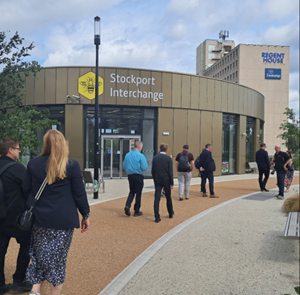
Stockport Interchange
We continued to the Underbanks, a historic district revitalised through sensitive regeneration and creative reuse, utilising Townscape Heritage Lottery fund money, which aims to support communities and local businesses by investing in historic areas. ‘Rediscovering the Underbanks’ is a project which has been running since 2017 to transform Stockport’s historic high street into a vibrant destination for residents and visitors.
Lunch was held at the Stockroom, a new community hub, library and cultural space. Stockroom provided the perfect setting to reflect on both the challenges and successes of local place-making. Helen was warmly welcomed by the rest of Stockport’s passionate planning team, showcasing even more exciting projects from across the borough. Stockport’s vibrancy was optimised by the council’s parting gift to Helen and Benjamin: a locally designed (and now much treasured) bag, alerting fellow shoppers that: “Stockport isn't Sh*t”.


Before she knew it, Helen was dragged from the Stockroom and whisked off down the M56 towards Port Sunlight. Here the delegation met with two members of Port Sunlight Village Trust’s dedicated staff, Agustina Solassi and Brian Pilkington. The quality of Port Sunlight speaks for itself. Consequently, it was explained that the Trust’s main challenge is to balance bringing its estate (and others) into the 21st century, whilst not compromising the Village’s heritage. Augustina and Brian clearly have deep affection for the village and spoke passionately about both its past and future, including projects to deliver secondary glazing and repairing the boating pond. Inspired by the tour, Helen was keen to buy some of Port Sunlight’s famous soap. Alas, Helen’s train was arriving shortly, and she needed to make a clean getaway.
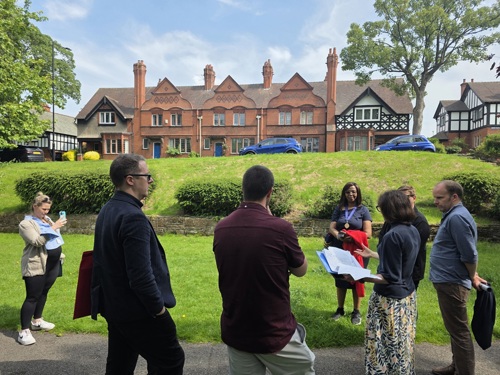
The group visiting Port Sunlight
There’s so much to see in the North West!
We look forward to meeting next year’s President.
Benjamin Vickers and Melanie Craven.
Planning aid North West in 2025
Across the North West, more than 50 committed volunteers, each bringing diverse skills, interests, and expertise, drive our ongoing efforts.
The NW region stands out as having the highest number of Planning Aid England (PAE) volunteers in England. Interestingly, our main challenge is not recruiting volunteers but rather identifying enough opportunities for them to contribute. This includes supporting local planning authorities with consultations, working with communities keen to engage in the planning process, undertaking projects for charitable organisations, or providing training.
Over the past twelve months, PAE in the North West has continued to strengthen its role as a trusted, community-focused arm of the RTPI, supporting residents, volunteers, partner organisations and local authorities across a wide spectrum of planning activity. The year has been defined by renewed volunteer engagement, university outreach, new project opportunities, and the steady expansion of our regional influence.
In the Spring, we met with the Yorkshire Regional Activities Committee to advise on how our region has successfully promoted the services and volunteer opportunities of PAE. This included advice on finding volunteers, finding opportunities to help communities, and maintaining an active Task Group.
A major focus throughout 2025 has been our Development Plan Monitoring programme, a core piece of annual work that continues to showcase the value of PAE volunteers. Updated guidance was prepared during the summer, with the monitoring exercise scheduled for the autumn and early winter periods, with findings to be issued to LPAs in the new year.
This year’s programme has been coordinated to support both the professional development of volunteers and the wider public interest, with active management and oversight from the Task Group’s Eleanor Rawsthorne.
Our university engagement has continued to grow, reinforcing PAE’s visibility among emerging planners. Presentations at the University of Manchester were particularly well received, with sessions delivered to both undergraduate and postgraduate students. These events not only raised awareness of PAE services but also provided career insights from across public and private sectors. Senior academic staff commended the value of PAE’s involvement and welcomed further collaboration.
Discussions have also progressed with other universities in the region that offer planning and planning-related courses that are not (currently) RTPI accredited. The objective is to reach anyone interested in a career in planning.
Volunteer development has remained a priority, with ongoing work to organise a Gypsy and Traveller CPD session, exploring legal rights, planning processes and lived experience. Speaker outreach has continued across the year, with the event expected to run in early 2026.
Additional CPD ideas have been developed, including collaborations with RIBA and RICS on inclusive design and interdisciplinary learning, building on the success of previous joint events such as sessions on neurodiversity in the built environment.
2025 has also seen the Task Group actively identifying opportunities to support community and civic projects, reflecting PAE’s core mission. New opportunities have emerged with organisations such as the Walmsley Scout and Guides Club, seeking support with external accessibility improvements.
Across the year, the Task Group has continued to cultivate relationships with local authorities and partner bodies, monitoring upcoming consultations and signalling PAE’s readiness to support community engagement activity across the region. Continued coordination with the RTPI Young Planners and wider RAC structures has ensured that PAE remains integrated into North West professional networks and conversations.
As we end 2025, PAE North West remains a committed volunteer-driven network, proud of the support it provides to communities and practitioners across the region. Our work this year has reaffirmed the importance of accessible planning advice, collaborative learning, and building confidence among those seeking to navigate the planning system. With new partnerships emerging and volunteer interest continuing to grow, 2026 promises to be an even more impactful year for Planning Aid England in the North West.
We are immensely proud and grateful to our volunteers and look forward to opportunities to share our skills and expertise, representing the planning profession in the region, in 2025.
If also want to help organise Planning Aid activities in the Region by being part of the Task Group, contact Bev Watson at beverley.watson@rtpi.org.uk
If you'd like to support local people with planning issues then why not become a Planning Aid volunteer?
LPA engage: 2025 progress and plans for 2026
LPA Engage has continued to build momentum throughout 2025, with its Task Group now comprising eleven active members. Established in 2023 following the successful launch of the LPA Champions initiative in 2019, the group is dedicated to developing innovative approaches to support public sector planners across the region.
This year has seen a range of impactful events and initiatives. Below is a summary of key highlights from 2025:
Key events delivered in 2025
- Planning performance agreement and pre-application workshop Planning Advisory Service (PAS) collaborated with LPA Engage to deliver an innovative workshop; the first of its kind within the north-west. The session took place on 2 July 2025 and built upon an earlier introductory meeting. It brought together planning officers from eight participating Local Planning Authorities, combining knowledge sharing with targeted training. The aim was to explore opportunities for future service improvements and to discuss shared ambitions for collaborative working.
- Training CPD sessions Three Continuing Professional Development (CPD) sessions were delivered, focusing on Biodiversity Net Gain (BNG), Heritage, and Enforcement. Hosted by Stockport Council, Rochdale Council, and Manchester City Council, these sessions attracted approximately 30 delegates and provided valuable insights tailored to public sector planning professionals.
- Design CPD sessions In partnership with design specialists from Urban Imprint, Manchester Urban Design LAB, and Hyas Associates, three autumn sessions explored the role of design in planning. Topics included promoting high-quality design through policy and development management and fostering meaningful dialogue on design with both planners and wider stakeholders.
Looking ahead: plans for 2026
LPA Engage is actively developing a new programme of events and initiatives for 2026, aimed at further strengthening support for planning teams across the region:
- Social and networking events We are working with LPAs to deliver networking events that combine CPD elements—such as site visits to regeneration projects—with informal networking opportunities. Discussions are underway with two LPAs in the North West, and we welcome interest from others keen to participate.
- Heads of planning roundtable A proposed forum for Heads of Planning and Chief Planners will provide a dedicated space to address role-specific challenges, including budgeting and resource management, while fostering collaboration.
- LPA awards showcase Following the conclusion of the 2025 regional awards, we plan to host a showcase event where public sector award winners will present their projects and share key learnings. This initiative aims to promote best practice and celebrate excellence across the sector.
- APC mentoring programme We are scoping the potential for tailored sessions to support public sector planners preparing for their Assessment of Professional Competence (APC), as well as experienced practitioners considering membership. These sessions will offer practical guidance on assessment routes and professional development.
Join us in 2026
With a dynamic programme of new events and resources planned, 2026 promises to be a transformative year for LPA Engage. We invite planning departments across the region to engage with the Task Group and take advantage of the support available. To explore how your LPA can get involved, please don’t hesitate to reach out.
Biodiversity net gain through an LPA's lens
Stopford House, Stockport
April 2025
A highlight of my year to date has been coordinating the delivery of the RTPI LPA Engage event in April looking at 'Biodiversity Net Gain Through an LPA's Lens'.
Scheduled for just over a year since the mandatory BNG legislation came into play, the event sought to capture a range of the key themes occupying the headspace of planners and others working across the industry thereafter.
After introductory comments by our co-Chairs Melanie Craven and Nick Leslie, we launched into the main learning points with insightful presentations on Wirral Council's approach both to policy and delivery mechanisms (Ayla Thompson), and its legal perspective, with a rundown of securing BNG via Section 106, Conservation Covenant and planning conditions (Nicky Folan).
Rachel Rhodes then turned attentions to the challenges of open mosaic habitats and achieving BNG on previously developed land, and Krista Patrick (GMCA) and Nick Leslie and Tim Body (both Stockport Council) took us to lunch via their summaries of approaches to habitat banks as a responsible body and as a local authority provider, respectively.
In the afternoon session, we aimed for interactive and engaging, as Joe Gough (WSP's Nature Advisory team) chaired a panel then hosted a case studies quiz.
The panel fished for opinions on enforcement options and compliance with the BNG planning condition from Dave Westhead (Stockport Council) and Christine Clapworthy (Greater Manchester Ecology Unit). It was a session that prompted several audience questions and discussion of scenarios. This meant a briefer stint for Joe as quizmaster than programmed, but still time to talk through examples from validation to determination and beyond.
We finished with a thought-provoking presentation by Richard Thomas from Trustgreen on using BNG to grow communities.
A big thank you to the Stockport Council planning team for hosting, and everyone else who played a role in sourcing speakers, refining the topics, helping on the day, or any other preparation, including Bev Watson, as well as RAC volunteers Jade Corcoran, Melanie Craven, Kath Lawless, Jo Harding, Kieran Blaydes and Kamil Rog.
EDI champion update
The RTPI North West has continued to establish itself as a proactive champion of EDI, setting a precedent for other regions across the UK to follow. Through our dedicated EDI Committee, we are proud to have led the way in embedding inclusivity within planning practice, professional development and placemaking. This year has marked a defining chapter for our work, as ideas have grown into actions, and collaborations have delivered tangible change.
Advancing inclusion through CPD
Earlier this year, we hosted Unlock the Future of Planning and Development with Equity, Diversity and Inclusion at WSP’s Manchester office. This was a landmark CPD event that brought together leaders from across the built environment. Speakers included Ransford Stewart MBE (BAME Planners Network), Imogen Clark (Make Space for Girls), Joan Rutherford MRTPI (Older People’s Housing Champions), Terri Balon (RNIB), Adam Preston (LGBT Foundation), Tarisiro Fundira IEng MICE (ICE), Martin Jeffrey (Eversheds Sutherland) and Sophie Stanton (P4 Planning/RTPI), co-chaired by Sophie Stanton and Michael Atkinson-Smith.
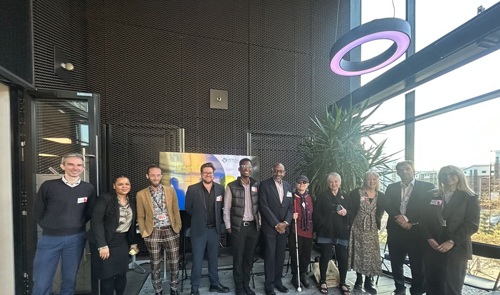
Unlock the Future of Planning and Development event
The discussion explored how planners can embed inclusivity at every stage, from representation and engagement to Equality Impact Assessments (EqIAs) as tools for design quality and accountability.
Building on this success, the Committee is developing new EDI-focused CPD sessions for early 2026, including Neurodiversity in Planning , Women’s Safety in the Built Environment and Building Inclusivity in the Built Environment with BAME Professionals and Students. These events will continue to challenge and inspire practitioners to design and plan spaces that work for everyone.
Celebrating Success: The Manchester LGBTQI* Heritage Tour
In August, during Manchester Pride month, we delivered one of our most ambitious and successful initiatives to date: the Manchester LGBTQI* Heritage Tour and Celebration. Working in partnership with LGBT Foundation, Manchester Pride, Manchester City Council, Manchester Metropolitan University, Village Angels and volunteers, this sold-out event brought together planners, students, local businesses, charities and residents to explore the rich social and built heritage of Manchester’s Gay Village, a place defined by resilience, protest and community spirit.
The tour concluded with a celebration at New York New York on Bloom St Manchester, marking both Manchester Pride and LGBT Foundation’s 50th anniversary. Together, attendees helped raise over £1,000 towards the creation of heritage signage across the Gay Village, ensuring its stories are permanently embedded in the fabric of the city.


The next stage of this project will see the Committee working with partners and volunteers to design and locate these heritage signs, launching in time for Manchester Pride 2026. This initiative represents inclusive placemaking in action, connecting culture, identity and the built environment to celebrate Manchester’s vibrant LGBTQI* legacy.
If you would like to take part in the consultation in preparation for the heritage signage, please visit the following form and share your thoughts:
https://forms.gle/uUuZVZCypfbepGpP8
Looking ahead
As one of the first RTPI regions to establish a formal EDI Committee, the North West continues to lead by example, demonstrating how regional networks can take ownership of EDI objectives and translate them into meaningful outcomes. Our achievements this year reflect what can be achieved when inclusivity is placed at the heart of professional practice.
We extend our heartfelt thanks to every member of the EDI Committee, our Regional Activities Committee colleagues, and the many partners, sponsors, and volunteers who have supported our work. We would also like to extend a special welcome to our new EDI Committee volunteers, who are equally keen in getting involved in our exciting journey.
If you are passionate about advancing EDI in planning, we welcome you to join us. Together, we will continue to shape the future of the profession and deliver inspiring and positive projects in the region which celebrate and advance spaces and places.
North West young planners 2025
Young Planners events of 2025:
RTPI x RICS welcome back social
February 2025
In February Sophie Stanton hosted another one of our SOLD OUT collaboration events with RICS in Castlefield, Manchester. The event was an opportunity to reconnect with young professionals from across the built environment profession and beyond.
It was great to see so many passionate individuals from diverse backgrounds coming together to share ideas, build new relationships, and strengthen their networks. The vibrant and welcoming atmosphere at Barça Bar provided the ideal setting for these valuable conversations, offering a chance to catch up with familiar faces and make new connections in the industry.
The event received very positive feedback, with a clear demand for more future collaborations with RICS.
Speed networking event: University of Liverpool
March 2025
In March, the University of Liverpool Planning Society hosted a successful Speed Networking event in collaboration with the RTPI North West’s Education and Careers Task Group. Finlay Hegarty and Jessica Parry led the evening, which saw a strong turnout from students. Michael Atkinson-Smith and Joshua Parkinson attended on behalf of RTPI North West, encouraging students to explore careers in planning and the wider built environment. The event gave students a valuable chance to speak directly with professionals and gain insights into their future paths. The event highlighted the impact of collaboration and supported the RTPI’s goal of promoting the value of planning.
RTPI NWYP and RICS Ping Pong tournament 2025
November 2025
November saw planners, surveyors and young professionals from across the North West come together for an evening of friendly competition at Twenty Twenty Two in Manchester, as the RTPI North West, RTPI Young Planners and RICS Matrics hosted the 2025 RTPI NWYP & RICS Ping Pong Tournament.
The event provided a lively mix of ping pong, pool and darts, alongside great networking and plenty of laughter. Attendees from across both institutes enjoyed reconnecting with colleagues, making new contacts and unwinding in a relaxed and social setting.
After a series of close matches and some impressive rallies, congratulations to our crowned 2025 Ping Pong Champion, earning well deserved applause for skill, focus and good humour throughout the tournament, not forgetting our RTPI NWYP and RICS trophy!


A huge thank you goes to P4 Planning Ltd and Fisher Wilson Ltd for sponsoring the event, and to all who took part or supported the evening. The friendly rivalry and cross-institute collaboration made for a fantastic night, and we’re already looking forward to doing it all again next year!
Sister walking tour
June 2025
In June, Jemma Brabrook organised a walking tour of Sister, Bruntwood’s £1.7 billion innovation district in central Manchester. The tour was led by Annabel Meredith and Jenni Greenwood MRICS from Sister, who shared an in-depth overview of the site’s ambitious 15-year vision to deliver thousands of jobs, new homes, world-class workspace, and vibrant green spaces. They also explored the challenges of balancing 21st-century innovation with the district’s distinctive 1960s Modernist heritage.
The event offered a high-quality learning experience, giving attendees valuable insight into one of Manchester’s most
significant regeneration projects. It also provided a platform for discussion, networking and shaping conversations about the future of our cities.
Urban sketching: A drawing-themed workshop and walking tour
June 2025
In June, we hosted the second edition of our Urban Sketching Walking Tour led by George Bissett. This time, the group explored New Islington, Ancoats, and New Cross, using sketching as a way to reflect on regeneration—both past and future. Cullen’s concept of Serial Vision returned as a guiding tool, while participants also experimented with reimagining a surface car park as a potential new public space. Feedback highlighted the event’s welcoming atmosphere and creative spirit:
“The relaxed and friendly environment made learning fun and approachable. My biggest takeaway was realising it’s okay to start
drawing without aiming for perfection. Learning about Manchester’s redevelopment projects added a deeper connection to the sketching experience and to the city itself.”
RTPI North West annual dinner
June 2025
June was a busy month for us, with members of the Committee attending the RTPI North West Annual Dinner — an evening dedicated to celebrating the outstanding planning achievements across the region. The event offered a fantastic opportunity to connect with colleagues, catch up with familiar faces, and welcome new ones, while reflecting on the breadth of work shaping places across the North West.
Congratulations go to all of this year’s award winners, including Hannah Mitchell, who was recognised as North West Young Planner of the Year. We are also grateful to Places Matter for once again sponsoring the Young Planners’ table, reinforcing their commitment to supporting early-career planners and creating space for us to engage with the wider profession.
The dinner was not only a celebration of success but also a reminder of the strength of the planning community in the North West — setting the tone for another exciting year ahead.
RTPI Young Planner summer social
July 2025
In July, Ryan Killeen and Oliver Price hosted the sold-out Summer Social at Ramona in Manchester’s Northern Quarter. The evening brought together lively conversations, networking, and plenty of pizza, tater tots, and frozen margaritas on the sunny outdoor patio.
The event offered a great chance for members to reconnect with peers and meet others from across the region in a relaxed, informal setting. Once again, the Summer Social underlined the value of building connections beyond the workplace for the Young Planners community.
Manchester and Salford's expansion: A focus on Strangeways and Holt Town (RTPI X FFT)
July 2025
The RTPI Young Planners, in collaboration with fft MCR, hosted a well-attended event at the Deloitte office, focusing on the ambitious urban regeneration plans for Manchester and Salford, specifically in the Holt Town and Strangeways areas. Chaired by Jemma Brabrook, the session featured insights from speakers including Louise McManus (Manchester City Council), Georgina Iliff (Avison Young), Amelia Davis (Salford City Council), Harriett Noall (Salford City Council), and Mikey Percival (Deloitte), who shared their expertise on the next wave of regeneration in these key northern cities. The event comprised presentations, a Q&A session, and a panel discussion, providing a comprehensive exploration of the unique challenges and opportunities within these growth strategies.
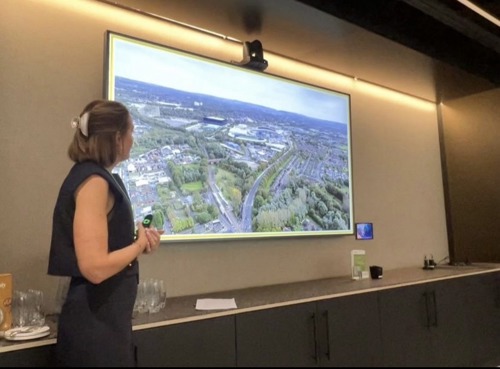
Holt Town presentation
Key discussions highlighted the importance of maintaining a strong sense of place, fostering community-led masterplanning, and balancing existing constraints with the protection of key assets. Speakers emphasised the central role of heritage and culture in placemaking, advocating for a long-term view on climate resilience and moving beyond a sole focus on the Build-to-Rent market. Specific regeneration plans included Holt Town's transformation into a sustainable neighbourhood with 4,500 new homes guided by an endorsed Neighbourhood Development Framework, and Strangeways' potential for 7,000 new homes and significant commercial expansion, addressed by a Strategic Regeneration Framework currently undergoing public consultation, despite challenges posed by HM Prison Manchester. The event also underscored the critical role of local authorities as custodians of these evolving urban spaces.
Manchester Archives and Local Studies Research Evening
Manchester Archives Search Room, Central Library
September saw the planners from across the North West attend the Manchester Archives at Central Library for a fantastic tour of the archives, including the places off-limits to the general public. The library staff alongside RTPI volunteers showcased the archive resources available for planners in any sector to access. The evening included informal networking amongst people from a range of organisations, including prospective planners, retired planners and those now working in education. The guided tour took in the magnificent reading room, the public exhibition spaces and the basement stores, before culminating in a fascinating display of a range of archive material showcasing the development of Manchester from the 1900s up to the present day.


Regional research and good practice
The achievements of North West Planners on influencing policy and implementing good practice
Policy and research task group report for 2025
Planning policy has been at the forefront of Planning policy has continued to be high up the government agenda in 2025. The UK Government has largely sustained the momentum behind its planning reform initiatives which began in late 2024, to support its aim of delivering a target of 1.5 million new homes. Changes to the National Planning Performance Framework (NPPF) were published in December 2024, following consultation in the months before, which resulted in the inclusion of the much-debated ‘grey belt’ concept. In a busy end to the year nationally, the Office for Place was then closed and its functions reintegrated with MHCLG.
There has been no let-up in 2025. The year began with consultations on options to simplify the local plan making process, and on a new approach to revising the NPPF. Likewise, the Report of the New Towns Taskforce was published in September, with the recommended locations including Victoria North in Manchester, and Adlington in Cheshire East. How the government responds to the report and the next steps in this process will be watched keenly by practitioners across the region.
Of particular interest to the Policy and Research Task group was a set of consultations on speeding up and improving transparency around build out, as well as reforming housing site thresholds to introduce a more proportionate system. In response, the task group held a roundtable with planning practitioners, to record perspectives from the region and feed them into the RTPI’s formal consultation responses. Our roundtable was well attended and led to a lively discussion, representing a cross-section of experiences from across sectors and perspectives. Participants had responded to an earlier call circulated among the region’s membership, and we are grateful to those who contributed their time and expertise. Among many other reflections, there was consensus that a lack of data and understanding of build out exists currently, and that a stronger evidence base on this is required. The views recorded were shared with the RTPI’s Policy and Public Affairs team, and informed the RTPI’s full response to the consultations, which is also published on the RTPI website.
As part of this process, the Policy and Research task group met with RTPI officers, to help identify how we could best collaborate from the north west, including inputting to consultation responses. An ongoing dialogue will help us to coordinate our own responses in future and help to input north west members’ perspectives into the RTPI’s work. We continue to anticipate new proposals and consultations, including on national development management policies, which a government update in November promised will be published alongside a further updated NPPF before Christmas 2025.
On the research side, the north west region is contributing funding to the RTPI’s Early Career Research Grant scheme, as it has done in previous years. Applicants, who must be early career academics at RTPI-accredited planning schools or individual RTPI members, can bid for a small grant to fund research on a planning topic of their choice, and are encouraged to include case studies in the regions that have submitted funding. The scheme now runs alongside the RTPI’s Practitioner Research Fund, and this year’s application windows were launched at the RTPI Research Awards ceremony in September, closing in October.
Members of the Policy and Research task group were part of the assessment panel to determine successful applications, alongside practitioners and academics from across the regions. They have also fed into wider process, working with the RTPI’s research team, and have been seeking ways to support potential bids early in the process next year. We hope to continue supporting this initiative and others which help to deliver vital research on issues the planning community requires further evidence on. Last year’s funded projects include research into planning for reducing loneliness for older people, health-focused policies, and digital literacy of planning students.
The task group has also been promoting collaboration among universities, and with the RTPI, with the universities of Manchester, Salford, and Liverpool actively working with the RTPI in the region. We have been keen to enhance opportunities for engagement between students and practitioners, which is a crucial part of planning education. This includes looking at methods of matching up members who are interested in sharing experiences with students, with university academics who are looking for guest speakers, in conjunction with the Education, Careers and Mentoring task group.
Our experiences and discussions during the year have highlighted shared interest in developing practice-facing research, and we have coordinated meetings between academics at the planning schools across the region with the aim of developing ongoing research collaborations. Given the pace of change in planning policy nationally and the numerous demands facing the industry, we are actively looking at ways to support research that can best contribute evidence to enhance practice in the region. The benefits of collaboration between practitioners, academics, and the RTPI will continue to underpin our work in the coming year.
Guest academic articles:
Institutional diversity in community-led housing: Lessons from the Global North for North West England
Yueh-Sung Weng, University of Manchester
Community-led housing (CLH), proposed as an ‘alternative’ to state-led and market-oriented housing models, empowers community groups to manage their built environment for both individual and common benefits. This model offers a localized housing solution to persistent shortcomings in mainstream housing provision, such as uneven housing delivery and affordability issues. In the Global North advanced economies, the housing model is often framed as a strategy to tackle broader socio-economic and housing issues that extend beyond the physical dimension, including housing inequality and the erosion of community autonomy. However, most studies focus on Western liberal perspectives and neglect that former Eastern Bloc and East Asian advanced economies have distinctive socio-economic, political, and institutional histories. These factors lead to the differing interpretations across these geographical settings and shape how ‘community’ and collective actions on housing are understood. This article explores diverse forms of community-led housing in the Global North, seeking to facilitate mutual learning among various regimes and contexts, with key insights applicable to North West England.
Across the UK, especially the North West region, housing delivery has been a challenging issue to solve. Three factors exacerbate the resulting housing crisis, including poor housing quality, decreasing social housing supply, and tenure insecurity for lower-income tenants. A quarter of homes in the North West were constructed before 1919, and half struggle to meet modern building standards[1]. Social housing facilitators also struggle to compete with expanding private rented sector. Particularly, the Greater Manchester private rental market expanded by 34 percent from 2011 to 2021[2]. Furthermore, tenure insecurity, which is caused by a less regulated market, impacts lower-income tenants the most. Conversely, community-led housing is operated as a housing model to diversify the delivery mechanism and to gain local capacity for housing management.
The city regions of Manchester and Liverpool both have longstanding traditions of community-led housing. The first generation of housing cooperatives originated from Manchester, while Liverpool City Region has been a leading force of British community land trust movement since the 1970s. Nevertheless, this legacy has been constrained by several political and institutional roadblocks, including uneven resource distribution, ‘pro-private sector’ planning and funding schemes, and short-sighted policy-making that prioritizes mass housing production over community benefits.
Through an international comparison, this article assesses how other regimes deal with similar housing challenges and identifies some transferable elements for evidence-based housing policy innovations.
Community-led housing movement in the western liberal regimes
Community-led housing in the Global North is viewed as an alternative housing solution that complements traditional housing provision. This housing model in developed countries originated from the movement when “modernist town planning, which is classified as rigid and utopian comprehensiveness style, had been questioned in its capability to fulfil varied housing needs raised by social groups[3]”. This shifting planning focus suggests that neither a state-led nor market-oriented model alone can provide social cohesion, economic revitalization, and democratic governance.
Community-led housing movements once flourished from 1960 to 1980 in Europe and North America. Formalized community-based housing organizations, such as co-housing and community land trusts, have been promoted by states to reduce public and private sector interventions in housing improvement. For instance, co-housing initiatives in Denmark and collective housing in Sweden are self-managed community organizations where members have built up ideal visions of living together since the 1960s. In the 1970s, the community-led renewal approach gained momentum as the state-led model struggled to address housing affordability issues. As policymaking shifted towards the market, this inequality has intensified.
Community-led housing initiatives have sprung up as an alternative to these two mainstream policy models. For example, Merseyside community land trust movement was led by residents aiming to steer the direction of housing development since the 1970s, while Home for Change was set up as an initiative to rebel against a state-led redevelopment scheme in Manchester in 1978, as a pioneering housing cooperative to maintain vivid social life in Hulme.
Nevertheless, this momentum gradually vanished from 1980 to 2010 for two reasons. First, the state’s housing subsidies for community housing have been cancelled. Second, to sustain the financial model, community-led housing initiatives in developed countries have been strongly influenced by private investment. Yet, the community-led housing movement in parts of Europe and North America was able to mount a comeback in some places due to the rise of community-based housing retrofitting in the 1990s, showing its resilience. For example, self-help housing initiatives were organized to cope with the housing provision issue that resulted from state austerity measures during the economic downturn. Some small-scale retrofitting projects emerged during this period in Manchester, such as Sensible Housing, a Bolton-based housing cooperative that conducts renovation of underutilized housing, providing tenants with an affordable and secure home.
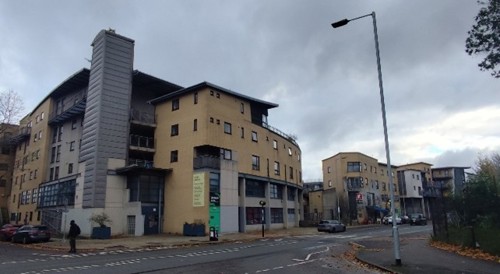
Home for Change housing cooperate in Hulme, Manchester.
The community-led housing movement in Western liberal regimes has developed alongside wider agendas relating to housing reform and political devolution. However, organisation growth and reliance on housing subsidies often diluted their original community focus. The contested power relationships in a housing partnership, which can mean a struggle for influence and control among the various stakeholders, can likewise hinder social-mixing or other innovative programmes to accommodate people who experience homelessness and financial difficulty.
The movement in the Eastern European bloc and East Asian developmental states
Compared to the Western Liberal regimes of Europe and North America, the democratization in Eastern Europe and East Asia came relatively late, between 1974 and 1990, with notable examples being the collapse of the Eastern Bloc and the political reforms in the Four Asian Tigers of Hong Kong, Singapore, Taiwan and South Korea. These regimes were characterized by strong state involvement in economic and urban developments, which are a distinctive type of government regime in the Global North. This distinction arises from its unique institutional characteristics, such as legal frameworks, governance structures, and housing stock and tenure. However, let us not assume one political system is superior to the other. Cases happening in these ‘previous authoritarian’ regimes still offer valuable lessons.
Higher home occupancy is a typical institutional feature in former European communist countries and some East Asian advanced economies. Taking the European Eastern Bloc as an example, homeownership in Romania, Slovakia, and Slovenia is over 75 percent, which has resulted from the privatization during the 1990s political reform toward the Western liberal vision. To reconstruct the state-led housing loans and debt, these former USSR states sold state-owned housing units to citizens at 0.15 times of market price[4]. Consequently, private ownership in Slovenia grew from 66 percent to 88 percent in ten years of democratization, while the rate in Slovakia has nearly doubled from 50 percent in 1989 to 95 percent nowadays[5]. Nevertheless, only the ‘baby boomers’ benefited from this affordable housing price offer. The next generation suffers from rising housing prices in the recently deregulated market after privatization. Furthermore, the mass privatization was less open to the development of private and social rental sectors. High owner occupancy in Eastern Europe suggests that the social rental market should be reformed for affordable housing solutions.
Similarly, East Asian Developmental states are known for their direct intervention in economic and urban development, including Japan, South Korea and Taiwan. These authorities regard housing provision as one of their commitments to promoting social welfare. Popular community-led housing forms, such as community land trusts and housing cooperatives, are challenging to implement in these Asian advanced economies. That is because the concept of communal ownership conflicts with prevailing social norms in these societies, where homeownership is considered essential for individual welfare security and social identity[6].
As the prevalent form of community-led housing, homeowner associations in East Asia have adapted to counterbalance market dominance in the socialist context of mainland China, while it enhances owners’ power in steering housing initiatives in the pro-capitalist context of Taiwan and South Korea. The developmental states offer the higher and middle classes a degree of autonomy in governing housing institutions in this form. Nevertheless, community-led homeowner associations in East Asia are not merely privately owned organizations that offer exclusive services to specific community groups as Western literature suggests[7], often operating across both the government and private sector’s frameworks. For instance, Korean homeowners work closely with the state and chaebol (‘tycoon’ in Korean) in community-based redevelopment schemes.
East Asian cases suggest the success of housing initiatives depends on community bodies’ ability to collaborate with planning authorities and private sector. The ‘community’ therefore is defined by collaboration between the state, market and community bodies. In contrast, the Western liberal perspective often frames ‘community’ as an independent self-governing body detaches from the relationship of state or market. However, in the East Asian contexts, the current legal frameworks unevenly support homeowners’ empowerment in housing, which highlights the lack of diversified housing strategies for varied social groups who represent ‘community’. This policy framing results in tenants being excluded from community participation in housing in either Taiwan or South Korea, for example.

Gamcheon Old Village upgrading scheme where Busan local council, academia, and residents team up to mobilize their ideal vision of housing improvement. Photo by Alina Dmytrenko.
Lessons and insight from this international comparison
The term ‘community-led housing’ encompasses a complex spectrum of institutional contexts, policy framing, and community governance structures. In North America and Western Europe, the community-led housing movement has grown within diverse political and housing systems where ideologies, interests, and lifestyles vary broadly. Some projects pledge to achieve social outcomes, such as affordable housing, local control, and social inclusion for disadvantaged groups. Others have catered to wealthier community groups seeking alternative ways of living together in a high-end housing project.
These divergent examples suggest that even in Western liberal regimes with sophisticated legal frameworks to support community-led housing, delivery remains uneven. On the other hand, in these East Asian and Eastern European countries, the community-led housing movement did not necessarily align with the same principles of community autonomy and social inclusion. These two liberal counterparts are overshadowed by technocratic governance structures, and state intervention causes limited space for community bodies to steer the housing agenda directly. These institutional contexts favour ‘owner-based’ and ‘property-owning democracy’ policy framings, resulting in a lack of diverse housing forms to meet the housing needs of different social classes.
The institutional diversity of community-led housing questions the western liberal perspective which frequently idealizes ‘community’ as an independent and self-governing body, which does not acknowledge the influences of state or market in housing provision. Moreover, this agenda has been criticized as a way to mobilize ‘flattened’ governance structures where “not everyone gets resources they want, although everyone has a great say.[8]” Conversely, Eastern Asian cases demonstrate that the concept of ‘community’ emerges when community bodies collaborate closely with the state, third or private sector within decision-making across varied levels. This hybrid housing governance structure should not be regarded as a compromise of community bodies. Instead, it is a practical move to scale up the organization and its financial capabilities under market competition. Cases in East Asia point to future avenues of research in this field regarding community bodies’ ability to co-govern housing with ‘external’ facilitators and investors.
Community-led housing solutions have been developed differently in response to common housing challenges, including social housing shortage, the dominance of private rental sector, and poor quality housing, in different contexts across the Global North. ‘Community’ in the Western liberal perspective signifies an inclusive self-governing body for property owners and tenants to fulfil aspirations of liberty and liveability. In some parts of Eastern Europe and East Asia, community-led housing emerges alongside decisive state interventions and closer links to the market. This disparity is not a barrier. Instead, it shows how the idea adapts to local housing regimes and reflects on how the state, markets and communities share responsibility.
It also helps to identify a few transferable elements for housing policy innovations. Compared to Western liberal regimes, there is a lack of diverse housing strategies for varied social groups in Eastern European countries and East Asian developmental regimes. Inspired by East Asian examples, the community-led housing movement in Western liberal regimes may consider adopting a partnership that connects resident, planning authorities, third or private sectors.
In England, where planning authorities are trying to alleviate housing affordability and balancing social and private sector involvement in housing delivery, multiple stakeholder partnerships could strengthen the financial base of community housing bodies. A practical move to promote social targets requires an integrated approach that combines community-led housing with wider housing and urban renewal partnerships, including across the Greater Manchester and Liverpool City Regions. Then, community bodies’ relationships with the public, third and private sector in housing governance becomes increasingly significant.
Design Codes at the street edge: Lessons for the North West
Gonzalo Sánchez García, University of Manchester
Why the street edge matters
Design codes are becoming a central part of planning practice across England. The National Model Design Code (NMDC) encourages local planning authorities to develop local design codes or guides that set clear parameters for good design in their area. Here, the term refers to planning and design guidance that sets out clear, usually plot-based rules for the form and appearance of development, including frontages and the relationship between buildings and the street. In the North West, this is visible, for example, in Trafford’s authority-wide design code, adopted as a Supplementary Planning Document, and in Stockport’s current work on a borough-wide design code through the government’s Design Code Pathfinder programme. As this work accelerates, the question of what actually shapes everyday design quality becomes increasingly important. In reality, quality is rarely judged by policy documents or vision statements. It is assessed in the most ordinary places, at the street edge, in the narrow strip where private homes meet the public realm. Front doors, windows, thresholds, boundaries, planting and even the placement of parking collectively define how a street feels. They influence whether a place appears safe, welcoming, coherent or neglected. They affect whether it supports comfort, sociability and a sense of place, and whether new housing areas feel like somewhere rather than anywhere.
This article examines how design codes influence this public-private interface and how intentions for quality are translated into the built environment. It uses an analytical framework with four dimensions: visual, functional, environmental and experiential. The visual dimension concerns the form, colour and materials of frontages. The functional dimension covers comfort, access and security at the street edge. The environmental dimension considers planting, drainage, microclimate and wider sustainability, while the experiential dimension focuses on how streets feel in terms of enclosure, activity and place character.
The framework is applied both to design codes and to built outcomes in three national design coded housing developments: Upton in Northampton, Eddington in North West Cambridge and Poundbury in Dorset. Although these schemes lie outside the North West, they offer valuable insights into how codes perform in practice and what matters most when turning design ambitions into everyday reality. They show where codes can help to produce coherent, active and legible street edges, and where issues such as ecological planting, long-term maintenance and lived experience can fall between policy and delivery.
What three coded schemes reveal
In these three schemes, design codes appear to work best where they are specific, spatially explicit, and easy to verify on-site, particularly in visual terms. Visual qualities benefit most from this clarity. In all three cases, rules on frontage rhythm, door orientation, window placement, facade articulation and boundary treatment often lead to ordered, coherent and active street edges. The effects are visible in the way building lines remain consistent, in how corner plots are handled and in how front doors address the street. Where the code clearly describes the physical condition to be achieved, outcomes are more likely to be strong.
In the analysis, I group street edges into three broad types, direct, layered and vehicular frontages, depending on how close buildings are to the street, how thresholds are handled and where parking sits in relation to the home (Figure 1). These categories describe the dominant condition at the interface, even though in practice frontages often mix features from more than one type.

Other qualities are much more variable. Environmental performance shows the most variation across the three schemes and often emerges as the weakest dimension. Despite prominent sustainability aspirations, features such as sustainable drainage, shade, ecological planting, microclimate comfort and water management rarely appear as tangible elements at the street edge. Eddington performs better because it sits within a wider sustainability framework, yet even here, environmental expression at the interface depends heavily on stewardship and long term management rather than clear coding. In Upton and Poundbury, environmental elements are often minimal or entirely absent along many frontages. This suggests that broad environmental ambitions on their own are often not enough to generate strong outcomes on the street edge.
Functional qualities sit between the strengths of the visual dimension and the weaknesses of the environmental one. Permeability, security and lighting perform reasonably well where the code specifies building orientation, overlooking from habitable rooms and boundary heights. Comfort and accessibility, such as shade, inclusive thresholds, well placed seating and well-integrated parking, are far more uneven. In several locations where the code encourages these elements but does not require them, delivery is inconsistent. Parking, and especially how visible it is, has a noticeable effect on how the street feels. Where driveways, garages or forecourt parking dominate the frontage, experiential quality tends to deteriorate. This is evident in parts of Upton and Poundbury, where stretches of relatively inactive frontage weaken enclosure, reduce surveillance and dilute sense of place.
Experiential qualities such as sense of place, personalisation and enclosure also show mixed performance. Active frontages tend to appear more reliably where door orientation is controlled, but subtler aspects, including planting, threshold depth, maintenance and the overall feel of the street, depend heavily on resident behaviour and management arrangements. In all three schemes, the most uneven experiences occurred where responsibilities for semi private or planted spaces were unclear or where codes did not articulate what the interface should achieve beyond its basic physical form.
Implications for North West practice
These patterns matter for current planning practice in the North West. The region is experiencing significant housing growth and renewed attention to design quality, with many authorities preparing new local design codes and supplementary planning documents (SDPs). The analysis suggests that a promising way to improve outcomes at the public private interface is to focus coding effort on the elements that matter most for everyday experience. These include the relationship between buildings and the street, the presence of active openings, the depth and design of thresholds, the treatment of boundaries, the handling of parking and the visible expression of environmental ambitions. High level intentions, even when clearly expressed, rarely translate directly into these outcomes. Clear, spatially anchored requirements tend to be much more effective.
The three case studies also highlight the importance of governance. Upton shows that a prescriptive code can help to deliver visual order, but that environmental and experiential qualities remain fragile when maintenance responsibilities are unclear. Poundbury shows the strength of an approach led by urban form and strong design leadership, but it also reveals gaps in environmental performance where standards have not evolved over time.
Eddington illustrates the benefits of coordinated institutional governance and design review, yet environmental outcomes still depend heavily on stewardship. In every case, interface quality improves when design codes are supported by consistent review processes, clear management expectations and well defined ownership or adoption arrangements for planted and semi-private spaces.
A further implication concerns typologies and clarity of intent. The analysis suggests that interface quality tends to be more reliable where rules are tied to specific frontage types and where each type has a clearly articulated purpose. Where guidance distinguishes between direct, layered and vehicular frontages and specifies what each is meant to deliver, built outcomes tend to be more predictable. This is especially relevant in the North West, where many developments, especially those with perimeter blocks on main corridors or new suburban estate roads, face similar interface challenges. Coding corner treatments, window frequency, boundary heights, threshold depth and parking placement for these common configurations can help to avoid the problems observed elsewhere.
In sum, these lessons point toward a simple conclusion. The more clearly a design code expresses the desired condition of the street edge, and the more clearly it assigns responsibility for delivering and maintaining that condition, the more likely it is that quality will appear in the built environment.
Practical checks for everyday planning
Based on these insights, a set of simple checks can help North West authorities strengthen the public-private interface in new developments, for example on new residential avenues on the edges of or in infill schemes in older mill towns. These checks are relevant across different frontage types and can be read alongside a simple photograph or montage of a typical street edge that highlights doors and windows, thresholds, boundaries, planting and parking (Figure 2).

Active frontages tend to appear more reliably when door orientation and window frequency are written into the code. It is helpful if each dwelling contributes at least one meaningful opening to the public realm, and blank stretches are avoided as far as possible. Thresholds usually work best when they have enough depth to provide privacy, support planting and offer a comfortable transition between public and private space. Depths that are very shallow reduce comfort, while deeper spaces are more likely to become left over space or parking.
The street wall should feel continuous but not defensive. Low walls, hedges or railings help to define private space while maintaining visibility and enclosure. Tall opaque fences, ad hoc boundaries or exposed side plots tend to weaken character and perceived safety. Parking placement is equally critical. Where driveways and garages occupy large portions of the frontage, the visual and experiential qualities of the street often decline. Design codes can favour layouts that keep parking secondary to front doors and windows, and that use planting or side placement to soften its presence.
Environmental ambitions also need to be visible along the street edge rather than existing only in policy statements. Tangible features such as tree pits, rain gardens, shade, sustainable drainage features or biodiversity planting help to ensure that environmental objectives are felt in everyday use. Finally, responsibilities for semi private spaces need to be explicit. The quality of planted buffers, front gardens and shared thresholds depends heavily on maintenance arrangements. Where responsibilities are unclear, quality tends to decline quickly.
Key lessons: toolbox
- Clear rules for the street edge often help to achieve more consistent outcomes than broad design aspirations on their own.
- Environmental aims are more likely to succeed when they are expressed through tangible features such as drainage, tree planting and shade.
- The placement of parking strongly shapes the feel and safety of a street and works best when it does not dominate frontages.
- Well-proportioned thresholds and regular low boundaries can improve enclosure, comfort and personalisation.
- Governance and stewardship influence long term quality as much as physical design.
- Frontage typologies help to clarify intentions and reduce ambiguity when schemes are implemented.
Looking forward
As I step into the role of Chair of the RTPI North West, my priority for 2026 is to help strengthen the profession, deepen our regional impact, and create a more connected planning community across the North West. But before looking ahead, I want to acknowledge our outgoing Chair, Benjamin Vickers.

Darren Muir, 2026 Chair
Over the past year, Ben has shown exceptional dedication to the region, steering us through a period of continued change in the planning system, championing our members, and ensuring the North West remained one of the most active and outward-facing regions within the RTPI.
With that in mind, I want to outline the themes I hope to lead on during 2026.
- Advocacy for volunteering within the profession
Volunteering is one of the quiet engines that powers the RTPI. It is not only beneficial for the individual, but also for their employer, and by extension the wider profession.
In the North West, we have an incredibly active and talented community of planners, from public and private sectors to academia, and there is huge potential to channel this enthusiasm to promote the profession.
By championing volunteering we will:
- Strengthen the pipeline of new planners at a time when recruitment and resourcing challenges are real.
- Enhance professional development and leadership skills: allowing members to mentor, lead, engage in committees or outreach and thereby build confidence and capability. Volunteering is a great way to help build public-speaking confidence, presentation experience, networks, etc.
- Demonstrate our profession’s commitment to social value, community engagement and civic responsibility. These are values that are increasingly important in the public-and-private sector alike.
- Reaffirm the public-service ethos that underpins planning, but too often feels squeezed in times of resource constraint.
I believe that volunteering should not be seen as a something we do to boost our CVs – the benefits are far greater. Volunteering should be a defining feature of what it means to be a planner in the North West.
And I want us to encourage not only individual commitment, but institutional commitment, so that firms, planning authorities and other bodies recognise that when they support volunteering, they support their own resilience, capability and reputation.
- Building stronger ties with RIBA, RICS, and other professional bodies
No major place-making project in the region is the work of a single discipline. From Liverpool’s waterfront to Manchester’s urban neighbourhoods, from Lancashire’s strategic employment sites to climate adaptation across Cumbria, success always comes from strong multidisciplinary collaboration.
Deepening ties with our professional partners will:
- Improve cross-professional understanding.
- Enrich our CPD offer through shared learning.
- Strengthen our collective voice on planning reform, infrastructure, design, and climate policy.
- Foster integrated thinking across design, viability, engineering, ecology, heritage, and community engagement.
This theme aims to build on the existing relationship we share with other professional bodies in the region and positions RTPI North West as a convening force across the built-environment sector.
My final message is simple: get involved. If you’d like to volunteer, support our committees, or help shape the next generation of planners, you’ll find everything you need at:
rtpi.org.uk/membership/volunteer/how-to-get-involved
Together, let’s make 2026 another year where the North West leads by example.
Darren Muir
RTPI Chair 2026
[1] Greater Manchester Combined Authority. (2021). Census 2021 briefing: tenure. GMCA. Available here: https://www.greatermanchester-ca.gov.uk/media/7877/230414-housing-tenure-accessible.pdf
[2] The Smith Institute. (2016). The hidden costs of poor-quality housing in the North. The Smith Institute. Available here: https://www.northern-consortium.org.uk/wp-content/uploads/2018/10/The-Hidden-Costs-of-Poor-Quality-Housing-in-the-North.pdf
[3] Taylor, N. (1998). Urban planning theory since 1945. SAGE Publications.
[4] Ireland, D., (2020). What is wrong with housing in Eastern Europe today? Journal of Urban Regeneration and Renewal, 14 (2), 128-134.
[5] Ireland, D., (2020). What is wrong with housing in Eastern Europe today? Journal of Urban Regeneration and Renewal, 14 (2), 128-134.
[6] Shin, H.B. (2019). Contesting Property Hegemony in Asian Cities. In Y.L. Chen & H.B Shin (Eds.), Neoliberal Urbanism, Contested Cities and Housing in Asia (pp.193-209). Springer.
[7] He, S. (2015). Homeowner associations and neighbourhood governance in Guangzhou, China. Eurasian Geography and Economics,56 (3), 260–284.
[8] McKee, K. (2010). Skeptical, Disorderly and Paradoxical Subjects: Problematizing the “Will to Empower” in Social Housing Governance. Housing, Theory and Society, 28 (1), 1–18.